As per our Shipping and Returns Policy, custom cuts and fabricated parts are non-returnable. If you need an over- or undersized item, note it under "Comments" during Checkout. Cut-to-size orders have an acceptable cut tolerance of 1/8" (0.125"), so clarify if the adjustment is to be made on the (+) or (-) side of the saw blade.Please review our full return and shipping policy here.
Measure Twice, Cut Once
Since custom cuts and fabricated parts are non-refundable, be very careful while measuring your dimensions. As each cut is nominal, even the slightest miscalculation could be costly.
How to Use a Measuring Tape
Extend your tape measure several inches to find the 1 and 2 inch markers. In between the inch markers you’ll find 16 equally spaced tick marks.
Measure by counting the increments beyond the nearest inch. As the increments decrease, so does the length of the mark. For example, 1/2" has a bigger mark than 1/4" which has a bigger mark than 1/8". The smallest mark follows at 1/16". Please be aware that some measuring tapes may have even smaller increments.
Features of a Measuring Tape: Sliding End Hook
The sliding end hook is designed for two different types of measurements. An outside measurement (where the hook of the tape hangs over an edge), requires the hook to slide out a bit to account for the thickness of the material. When making an inside measurement (where the hook will push up against a surface), the clip slides in, again, accounting for its thickness. The measuring tape self-adjusts to guarantee an accurate measurement (as far as the tape is concerned).
Sanitizing Acrylic and Polycarbonate Sheet [X]
Acrylic and Polycarbonate Sneeze Guards and like products require special care while cleaning and disinfecting. To maintain the optical clarity of sneeze guards and other acrylic or polycarbonate items, use an acrylic or polycarbonate safe cleaner like Novus Plastic Polish #1, Brillianize Plastic Cleaner, or a mild soap solution.
Please reference the following compatible cleaners when DISINFECTING acrylic and polycarbonate items. The use of commonly available commercial alcohol or ammonia-based disinfectants may cause crazing and damage.
The Industry Standard for Cost-Effective Wear Resistance
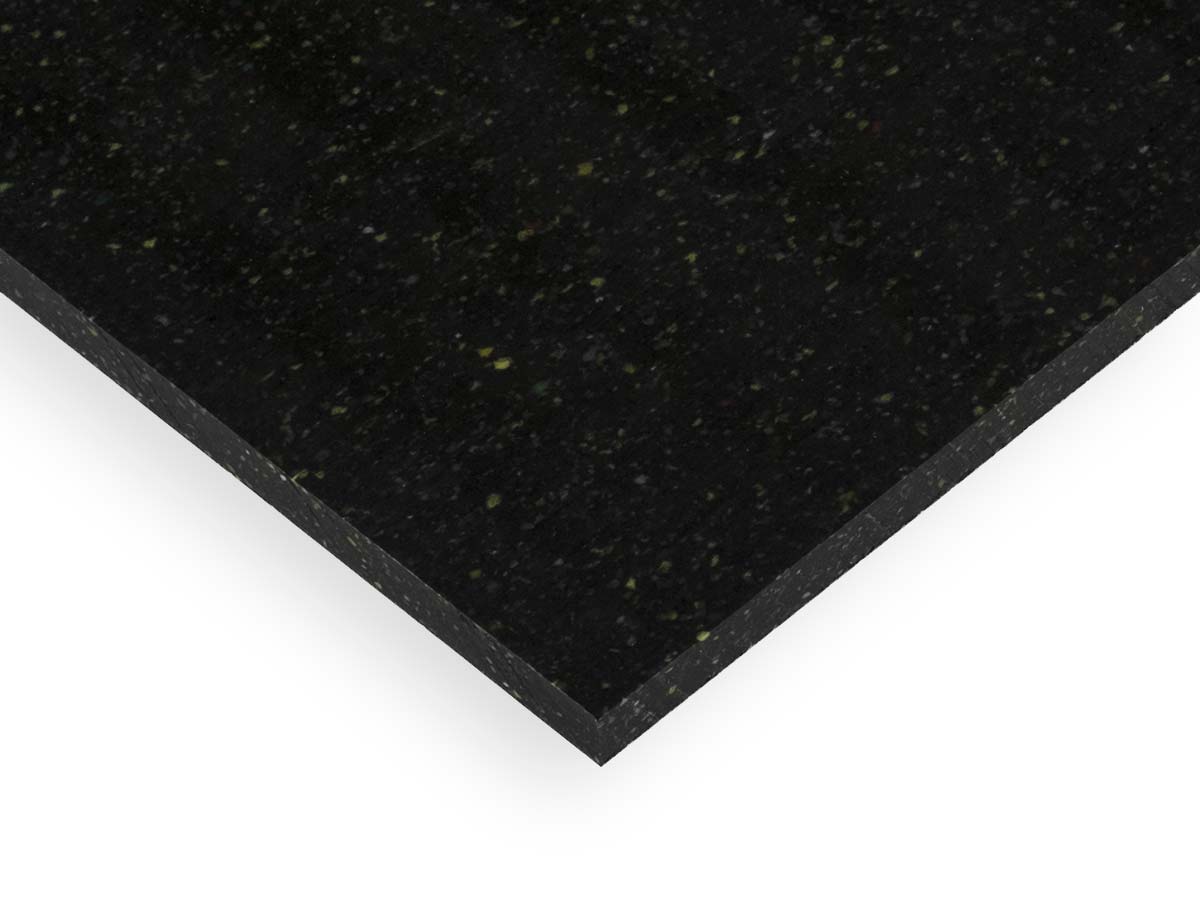
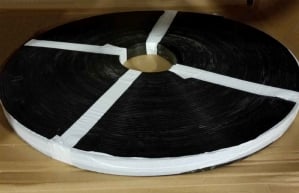
Reprocessed Black UHMW-PE lowers material costs without reducing performance. By blending virgin resin with recycled UHMW, this sheet delivers a heavy-duty solution engineered specifically for aggressive industrial environments.
Why It Rivals Virgin UHMW on Performance: Our Reprocessed UHMW is double-sintered (re-compressed) to create a material with increased surface hardness compared to virgin grades. It delivers exceptional abrasion resistance that rivals virgin material, making it the ideal value choice for abrasive environments where FDA compliance is not required.
Reprocessed UHMW is best for chute liners, chain guides, wear pads, and outdoor industrial parts. It is not FDA-compliant.
This black recycled, reprocessed UHMW-PE sheet is the go-to solution for non-food contact industrial wear parts. It is the correct choice if you need:
Cost-Effective Wear Resistance: Significantly lower price point than Virgin UHMW with comparable performance benefits. Our reprocessed UHMW is the lowest cost-per-pound of any UHMW grade.
Superior Wear Resistance: Double-sintered structure resists abrasion better than carbon steel.
Self-Lubricating Surface: The naturally waxy surface (0.15–0.20 dynamic coefficient of friction) prevents material buildup and eliminates the need for grease or oil.
Eco-Friendly Durability: By utilizing high-quality recycled resin, this sheet provides a "green" solution that delivers heavy-duty durability at the lowest cost-per-pound of any UHMW grade.
Moisture & Chemical Resistance: Like virgin grades, reprocessed UHMW has near-zero water absorption (<0.01%), meaning it won't rot, swell, or corrode, even when submerged. It also resists corrosive chemicals.
Reprocessed vs. Virgin UHMW-PE: What's the Difference?
While both materials offer extreme durability, the choice usually comes down to purity and price.
Choose Reprocessed UHMW (This Sheet) for industrial parts, outdoor applications, wear strips, and heavy-duty liners where cost savings and wear life are the priority. You get industrial-grade wear resistance for a significantly lower price.
Choose Virgin Natural UHMW for any wear application requiring FDA/USDA compliance (food contact and medical applications) or zero recycled content. Virgin grade offers the highest possible impact rating, making it critical for safety parts that cannot fail under shock loading.
Comparing Budget-Friendly Alternatives to Virgin UHMW
When Virgin UHMW is over-engineered or too costly for your project, you have two primary options. Both Reprocessed UHMW and HDPE offer significant cost savings, but they differ fundamentally in how they handle wear versus structural stress.
Choose Reprocessed UHMW (This Sheet) if sliding abrasion is your main concern. While less rigid than HDPE, its self-lubricating surface far outlasts HDPE in high-friction environments, preventing wear-through on liners and guides.
Choose HDPE if stiffness is your main concern. HDPE is more rigid and easier to weld for structural tanks, but it will wear out faster in abrasive sliding applications.
Important: If you require FDA compliance for food contact, neither of these budget options is suitable. You must stick with Natural Virgin UHMW or Natural Virgin HDPE.
Reprocessed UHMW is easily machined with common shop and woodworking tools (saw, drill, rout). However, please note the following for precision parts:
Thermal Expansion: UHMW has a high coefficient of linear thermal expansion. We recommend using oversized holes or slotted fastening points in your design to prevent buckling as temperatures fluctuate.
Tolerances: Due to inherent stresses in the material, achieving extremely tight tolerances can be difficult compared to materials like Acetal (Delrin) or Nylon.
When you order from Interstate Plastics, you're accessing an expansive nationwide network of material expertise. We source high-quality reprocessed resins to ensure consistency in flatness and machinability, helping you reduce maintenance costs and extend equipment life.
Handling: Cut sheets may have sharp edges. We recommend wearing protective gloves when unpacking and handling this material to ensure safety.
Suitability: We take pride in the quality of our materials as they leave our facility. However, because every project is unique, we cannot account for how materials are modified, stored, or used after delivery. Please perform the necessary tests to ensure this material is right for your specific application and end-use conditions.
UHMBR SH
Technical Performance
This reprocessed grade thermoplastic is engineered for heavy-duty industrial applications requiring a unique combination of extremely low friction, superior impact strength, and eco-friendly cost savings.
Superior Abrasion Resistance: Double-sintered during manufacturing, this material rivals virgin UHMW and outwears carbon steel in sliding abrasion applications.
Thermal Resilience: Operating range of -155°F to 180°F. It retains its impact strength even in cryogenic environments.
Friction Coefficient: Extremely low (0.15–0.20 static), providing a self-lubricating surface that prevents material buildup and sticking.
Key Properties
Eco-Friendly & Economical: Made from a blend of virgin and recycled resin, offering the lowest cost-per-pound of any UHMW grade.
Impact Strength: Maintained high impact resistance rating (partial or no-break); it absorbs significant shock energy without cracking, making it suitable for heavy industrial abuse.
Near-Zero Moisture Absorption: Absorbs <0.01% water, ensuring it will not swell, degrade, or rot in wet or outdoor environments.
Chemical Resistance: Impervious to most corrosive chemicals, acids, and alkalis (excluding oxidizing acids).
Sound Dampening: Viscoelastic properties reduce noise and vibration from moving parts and machinery.
Not FDA Approved.
Common Industrial Applications
Note: Reprocessed UHMW is NOT approved for food contact.
Conveyor Systems: Guide rails, belt scrapers, wear strips, chain guides, and idler rollers that reduce drag and energy consumption.
Bulk Material Handling: Liners for chutes, hoppers, bins, and truck beds to promote flow of coal, grain, sand, and gravel.
Mechanical Components: Sprockets, bushings, housings, pinion gears, and flanged rollers that operate silently without external lubrication.
Transportation & Heavy Equipment: Dump truck bed liners, snow plow scraping edges, fender extensions, and suspension wear plates.
Engineering Limitations & Alternatives
While Reprocessed UHMW is the leader in cost-effective wear resistance, specific environments may require different materials:
Food Compliance: This material contains recycled additives and is not FDA approved for direct food contact. Better Alternative: For food processing, choose Natural Virgin UHMW.
Structural Rigidity: UHMW is softer than other engineering plastics and susceptible to "creep" (cold flow) under heavy static loads. Better Alternative: For high-load bearings or structural gears, choose Cast Nylon.
Machining Tolerances: Due to internal stress and high thermal expansion, it is difficult to hold extremely tight tolerances on this material. Better Alternative: For precision machined parts requiring stiffness, consider Acetal (Delrin®).