As per our Shipping and Returns Policy, custom cuts and fabricated parts are non-returnable. If you need an over- or undersized item, note it under "Comments" during Checkout. Cut-to-size orders have an acceptable cut tolerance of 1/8" (0.125"), so clarify if the adjustment is to be made on the (+) or (-) side of the saw blade.Please review our full return and shipping policy here.
Measure Twice, Cut Once
Since custom cuts and fabricated parts are non-refundable, be very careful while measuring your dimensions. As each cut is nominal, even the slightest miscalculation could be costly.
How to Use a Measuring Tape
Extend your tape measure several inches to find the 1 and 2 inch markers. In between the inch markers you’ll find 16 equally spaced tick marks.
Measure by counting the increments beyond the nearest inch. As the increments decrease, so does the length of the mark. For example, 1/2" has a bigger mark than 1/4" which has a bigger mark than 1/8". The smallest mark follows at 1/16". Please be aware that some measuring tapes may have even smaller increments.
Features of a Measuring Tape: Sliding End Hook
The sliding end hook is designed for two different types of measurements. An outside measurement (where the hook of the tape hangs over an edge), requires the hook to slide out a bit to account for the thickness of the material. When making an inside measurement (where the hook will push up against a surface), the clip slides in, again, accounting for its thickness. The measuring tape self-adjusts to guarantee an accurate measurement (as far as the tape is concerned).
Sanitizing Acrylic and Polycarbonate Sheet [X]
Acrylic and Polycarbonate Sneeze Guards and like products require special care while cleaning and disinfecting. To maintain the optical clarity of sneeze guards and other acrylic or polycarbonate items, use an acrylic or polycarbonate safe cleaner like Novus Plastic Polish #1, Brillianize Plastic Cleaner, or a mild soap solution.
Please reference the following compatible cleaners when DISINFECTING acrylic and polycarbonate items. The use of commonly available commercial alcohol or ammonia-based disinfectants may cause crazing and damage.
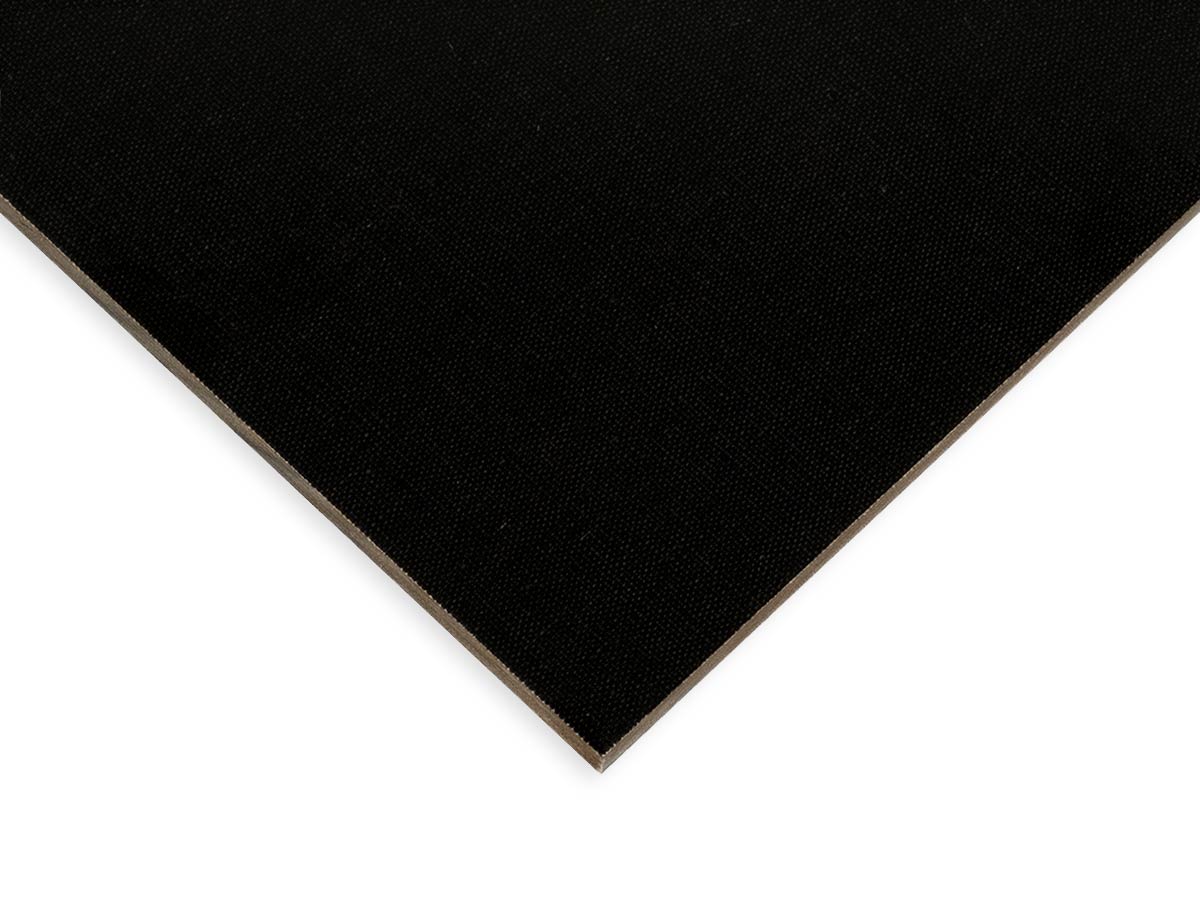
Black Canvas "CE" grade phenolic sheet is made from a coarse cotton fabric base combined with an electrical-grade phenolic resin. Cotton reinforcement provides this thermoset composite material with high mechanical strength and stiffness, enabling its use for reliable components in electrical applications.
Canvas CE is designed to provide physical toughness that withstands abrasion, impact, friction, and material fatigue. At roughly half the weight of aluminum, this composite is also corrosion resistant to most chemicals and substances.
Unlike regular Canvas C grade, Canvas CE is considered an electrical grade material. It is a better choice than Canvas for applications where you need:
Electrical Insulation:
Can be used in applications where electric interaction with materials is a concern, serving effectively as an insulator.
Reduced Operating Noise:
Operates with significantly less noise than metal components in moving applications.
Mating Part Protection:
Not as abrasive as fiberglass alternatives when used in wear applications.
Military Compliance:
Complies with the rigorous requirements of MIL-I-24768/14, Type FBG.
High Strength:
Offers stronger mechanical strength than Grade XXX phenolic.
Canvas CE vs. Linen LE: Understanding the Difference
While both are fabric-reinforced phenolic plastics, they are better suited to different part designs and machining requirements.
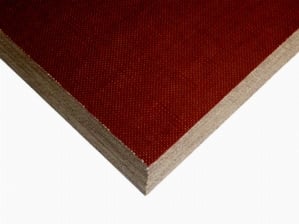
Choose Canvas CE (This Sheet) if you are manufacturing larger structural parts, heavy-duty gears, or insulators where the fine machinability of linen is not strictly required. Its coarse cotton fabric base provides rugged mechanical strength and physical toughness.
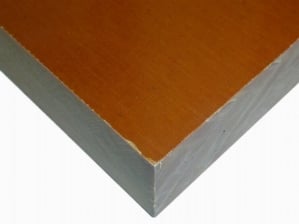
Choose Linen LE if intricate shapes and easy machining are your #1 priorities. Its fine-weave linen fabric allows for tight-tolerance fabrication, cleaner machined edges, and better dimensional stability than coarser grades.
Fabrication & Machining
Black Canvas CE is easy to machine. Its structural integrity allows for the fabrication of complex structural parts without the rapid tool wear associated with glass-filled composites.
Fabrication Note: Cutting or machining phenolic may create a noticeable resin-like odor and fine dust. For best results, machine in a well-ventilated area with proper dust collection and appropriate personal protective equipment.
Handling: Cut sheets may have sharp edges. We recommend wearing protective gloves when unpacking and handling this material to ensure safety.
Suitability: We take pride in the quality of our materials as they leave our facility. However, because every project is unique, we cannot account for how materials are modified, stored, or used after delivery. Please perform the necessary tests to ensure this material is right for your specific application and end-use conditions.
PHEBCE SH
Technical Performance
Black Canvas CE is an electrical grade thermoset composite engineered for applications that need high structural strength, electrical insulation, and material fatigue resistance. Phenolic sheets and rods are also known by the trade name Micarta.
Features a physical toughness that withstands abrasion, impact, friction, and material fatigue.
Weight-to-Strength:
Provides high strength and stiffness while weighing roughly half the weight of aluminum.
Chemical Resilience:
Corrosion resistant to most chemicals and substances.
Key Properties
Electrical Grade:
Designed for use in applications where electric interaction with materials is a concern and serves as a reliable insulator.
Military Specification:
Complies fully with the requirements of Mil-I-24768/14, Type FBG.
Machinability:
Easy to machine and operates with less noise than metal.
Mating Part Wear:
Not as abrasive as fiberglass alternatives when used in wear applications.
Tensile/Flexural Upgrade:
Provides stronger mechanical strength than Grade XXX phenolic.
Common Industrial Applications
Power Transmission: Commonly used to make gears, pulleys, sheaves, and rollers.
Electrical Components: Readily fabricated into insulators and non-conductive barriers.
Fastening & Support: Relied upon for structural bushings and washers.
Engineering Limitations & Alternatives
While Black Canvas CE Phenolic is highly effective for structural and electrical uses, specific environments may require different materials:
Finer Machining Tolerances: The coarse cotton fabric base of Canvas CE limits how finely it can be machined compared to finer-weave composites. Better Alternative: For intricate, fine-tooth gears or complex machined parts, choose Linen LE Phenolic.
Dielectric-Focused Applications: While CE is an electrical grade, may be better suited for applications that prioritize electrical insulation over structural toughness. Better Alternative: For static electrical insulation without heavy structural loads, consider Grade XXX Paper Phenolic.
High-Rigidity Structural Applications: Canvas CE provides strong mechanical performance and is less abrasive to mating parts than fiberglass-reinforced laminates, but some applications may require the added rigidity and dimensional stability of a glass-reinforced epoxy material. Better Alternative: For applications requiring higher rigidity, glass reinforcement, low moisture absorption, and strong electrical performance, consider G-10/FR-4 Glass Epoxy.
CE Phenolic - Phenolic Sheet - Black Canvas Phenolic Questions?