As per our Shipping and Returns Policy, custom cuts and fabricated parts are non-returnable. If you need an over- or undersized item, note it under "Comments" during Checkout. Cut-to-size orders have an acceptable cut tolerance of 1/8" (0.125"), so clarify if the adjustment is to be made on the (+) or (-) side of the saw blade.Please review our full return and shipping policy here.
Measure Twice, Cut Once
Since custom cuts and fabricated parts are non-refundable, be very careful while measuring your dimensions. As each cut is nominal, even the slightest miscalculation could be costly.
How to Use a Measuring Tape
Extend your tape measure several inches to find the 1 and 2 inch markers. In between the inch markers you’ll find 16 equally spaced tick marks.
Measure by counting the increments beyond the nearest inch. As the increments decrease, so does the length of the mark. For example, 1/2" has a bigger mark than 1/4" which has a bigger mark than 1/8". The smallest mark follows at 1/16". Please be aware that some measuring tapes may have even smaller increments.
Features of a Measuring Tape: Sliding End Hook
The sliding end hook is designed for two different types of measurements. An outside measurement (where the hook of the tape hangs over an edge), requires the hook to slide out a bit to account for the thickness of the material. When making an inside measurement (where the hook will push up against a surface), the clip slides in, again, accounting for its thickness. The measuring tape self-adjusts to guarantee an accurate measurement (as far as the tape is concerned).
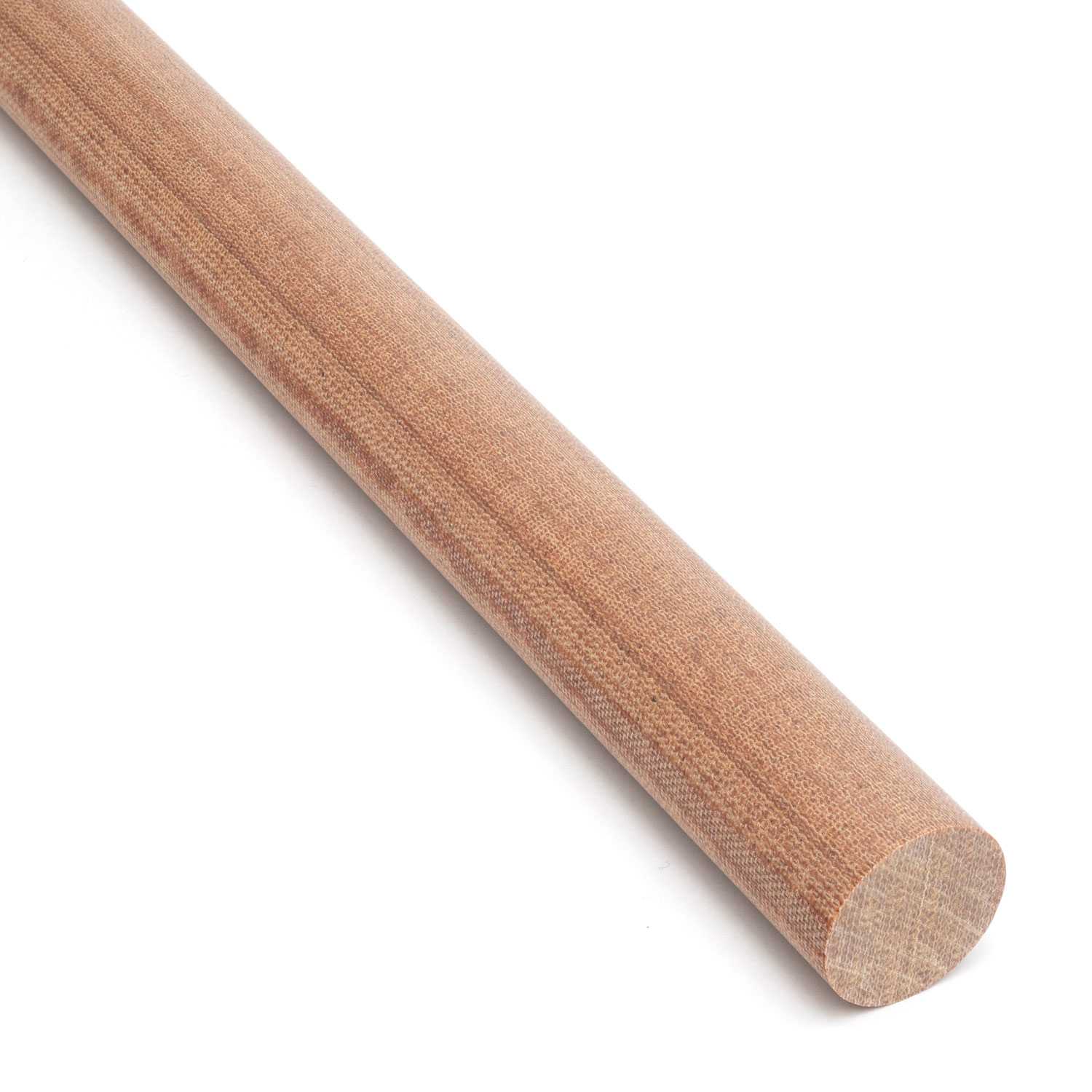
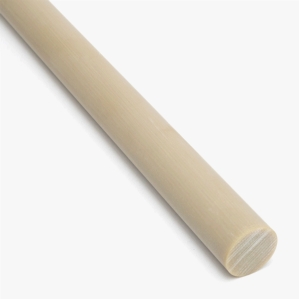
Canvas "CE" grade consists of a coarse cotton fabric base and a general-purpose phenolic resin. As a phenolic product, it is a thermoset composite material, which has the advantage of high strength and stiffness achieved through a reinforcement material. Phenolic plastics carry nearly half the weight of aluminum, with a physical toughness that withstands abrasion, impact, and friction and material fatigue. They are corrosion resistant to most chemicals and substances.
Canvas CE differs from regular Canvas C grade phenolic sheet or rod in that it is considered an electrical grade phenolic and can be used in applications where electric interaction with materials is a concern, or even as an insulator. It is easy to machine and operates with less noise than metal. In addition, this material is not as abrasive as fiberglass alternatives when used in wear applications. Canvas CE phenolic complies with the requirements of Mil-I-24768/14, Type FBG.
Stronger mechanical strength than Grade XXX phenolic
Electrical grade material
Mil-I-24768/14, Type FBG
High strength
Handling: Cut materials may have sharp edges. We recommend wearing protective gloves when unpacking and handling this material to ensure safety.
Suitability: We take pride in the quality of our materials as they leave our facility. However, because every project is unique, we cannot account for how materials are modified, stored, or used after delivery. Please perform the necessary tests to ensure this material is right for your specific application and end-use conditions.
PHENC RR
Canvas CE phenolic is commonly used to make gears, pulleys, sheaves, rollers, insulators, bushings, and washers. Phenolic sheets and rods formerly were known by the product name 'Micarta sheet.'
CE Phenolic | Phenolic Rod | Canvas Phenolic Questions?