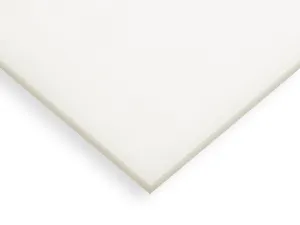
As per our Shipping and Returns Policy, custom cuts and fabricated parts are non-returnable. If you need an over- or undersized item, note it under "Comments" during Checkout. Cut-to-size orders have an acceptable cut tolerance of 1/8" (0.125"), so clarify if the adjustment is to be made on the (+) or (-) side of the saw blade.Please review our full return and shipping policy here.
Measure Twice, Cut Once
Since custom cuts and fabricated parts are non-refundable, be very careful while measuring your dimensions. As each cut is nominal, even the slightest miscalculation could be costly.
How to Use a Measuring Tape
Extend your tape measure several inches to find the 1 and 2 inch markers. In between the inch markers you’ll find 16 equally spaced tick marks.
Measure by counting the increments beyond the nearest inch. As the increments decrease, so does the length of the mark. For example, 1/2" has a bigger mark than 1/4" which has a bigger mark than 1/8". The smallest mark follows at 1/16". Please be aware that some measuring tapes may have even smaller increments.
Features of a Measuring Tape: Sliding End Hook
The sliding end hook is designed for two different types of measurements. An outside measurement (where the hook of the tape hangs over an edge), requires the hook to slide out a bit to account for the thickness of the material. When making an inside measurement (where the hook will push up against a surface), the clip slides in, again, accounting for its thickness. The measuring tape self-adjusts to guarantee an accurate measurement (as far as the tape is concerned).
Sanitizing Acrylic and Polycarbonate Sheet [X]
Acrylic and Polycarbonate Sneeze Guards and like products require special care while cleaning and disinfecting. To maintain the optical clarity of sneeze guards and other acrylic or polycarbonate items, use an acrylic or polycarbonate safe cleaner like Novus Plastic Polish #1, Brillianize Plastic Cleaner, or a mild soap solution.
Please reference the following compatible cleaners when DISINFECTING acrylic and polycarbonate items. The use of commonly available commercial alcohol or ammonia-based disinfectants may cause crazing and damage.
Cost-Effective, Easy-Release Formwork for Architectural Concrete
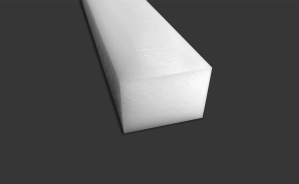
Natural HDPE (High-Density Polyethylene) Rustication Reveal Strips provide a cost-effective, reusable solution for creating crisp, clean architectural reveals and shadow lines in tilt-up and cast-in-place concrete applications.
Engineered for easy release, HDPE helps reduce concrete adhesion and is designed to be a reusable component for multiple pours compared to traditional forming materials. Replacing wood strips with these durable profiles helps reduce the risk of strip damage and minimize cleanup time, making it a highly cost-effective option for standard architectural reveals.
Unlike porous wood, HDPE features a smooth surface and excellent moisture resistance. These strips are a strong choice if your project requires:
Easy Release Properties:
The smooth, low-friction surface helps concrete release cleanly, reducing sticking and the risk of surface damage during form removal in standard applications.
Low Moisture Absorption:
HDPE helps reduce swelling, warping, or splitting compared to porous wood in wet environments.
Solid Impact Resistance:
Offers good resilience against jobsite wear and tear, maintaining reliable performance across multiple uses.
Economical Reusability:
Designed for repeated use in standard forming applications, helping provide consistent reveals and reduce replacement costs compared to disposable or easily damaged wood strips.
HDPE vs. Wood vs. UHMW: Which Is Right for Your Forms?
While wood is a traditional choice for rustication strips, HDPE provides a cost-effective reusable alternative for standard reveals, and UHMW offers added toughness for more demanding forming applications.
Choose HDPE (These Strips) if you need a cost-effective, reusable option for easy-to-release reveals. HDPE provides better moisture resistance than wood and dependable performance without the premium price of UHMW.
Choose Wood if you are building a single-use form where lowest upfront cost matters more than moisture resistance, clean release, or repeated use.
Choose UHMW if you have a highly demanding, multi-use forming application with hard-to-release reveals. UHMW is much tougher than HDPE and is designed for extreme impact and wear.
HDPE Rustication Strips are easily fabricated using standard woodworking tools. They can be drilled, countersunk, and routed for custom fitments. Because HDPE has a high coefficient of thermal expansion, slotted holes for fasteners are recommended to allow the material to "breathe" during temperature fluctuations. Note: HDPE is "non-stick" and cannot be effectively bonded with standard adhesives; mechanical fastening (such as screwing to the formwork) is required.
Watch: What is Natural HDPE?
Handling: Cut sheets may have sharp edges. We recommend wearing protective gloves when unpacking and handling this material to ensure safety.
Suitability: We take pride in the quality of our materials as they leave our facility. However, because every project is unique, we cannot account for how materials are modified, stored, or used after delivery. Please perform the necessary tests to ensure this material is right for your specific application and end-use conditions.
HDPNE SHRUSTICATIONSTRIPS
Technical Performance
Natural HDPE Rustication Reveal Strips are engineered for consistent performance in concrete forming. Made from High-Density Polyethylene, a durable material known for good moisture resistance and structural stability, these strips provide a smooth surface that reduces adhesion and performs reliably in standard formwork release.
The low-friction surface helps concrete pull away more easily, reducing cleanup time and helping preserve the strip for future pours.
Low Water Absorption:
These strips offer good dimensional stability in humid or wet concrete environments and reduce swelling risk compared to wood.
Jobsite Durability:
HDPE offers good impact resistance and toughness for normal handling, setup, and teardown conditions.
Key Properties for Formwork & Industrial Use
Durable Forming Profile:
Resists typical material handling and tool contact during setup and teardown in standard formwork applications.
High Chemical Resistance:
Resists many industrial chemicals, moisture, and alkalis commonly encountered in concrete forming environments.
Clean Surface Finish:
The smooth HDPE surface helps produce clean reveal lines when strips are properly installed and maintained.
Common Rustication & Forming Applications
Tilt-Up Construction: Creating crisp, reusable shadow lines and decorative architectural reveals on wall panels.
Cast-in-Place Concrete: Reusable edge forms, drip edges, and chamfer strips that detach easily from set concrete.
Precast Plants: Reusable reveal strips and modular form components for standard concrete forming applications where clean release and easier cleanup are priorities.
Material Handling: Protective runner strips and guides for cost-effective sorting and conveying.
Engineering Considerations & Alternatives
While Natural HDPE is a strong material choice for standard rustication applications, specific jobsite environments may require a specialized approach to prevent premature failure:
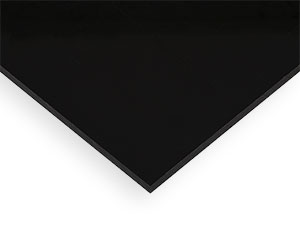
Outdoor UV Exposure: Natural HDPE has limited sunlight service and may discolor or experience reduced long-term performance after prolonged direct UV exposure. Best for Outdoor Storage: For exterior forms left outside for extended periods, choose Black HDPE Sheet.
Extreme Wear & Hard Release: HDPE is cost-effective but not as tough as Ultra-High Molecular Weight profiles. Better Alternative: If the project involves hard-to-release reveals or high abrasive wear, choose Natural Virgin UHMW Rustication Strips or Natural Virgin UHMW Sheet.
Mounting & Thermal Expansion: HDPE has a high thermal expansion rate. For long runs, use slotted holes for fasteners to allow the material to expand without buckling. Use countersunk mechanical fasteners to help maintain a flush, smooth surface, as HDPE cannot be bonded effectively with standard adhesives.