As per our Shipping and Returns Policy, custom cuts and fabricated parts are non-returnable. If you need an over- or undersized item, note it under "Comments" during Checkout. Cut-to-size orders have an acceptable cut tolerance of 1/8" (0.125"), so clarify if the adjustment is to be made on the (+) or (-) side of the saw blade.Please review our full return and shipping policy here.
Measure Twice, Cut Once
Since custom cuts and fabricated parts are non-refundable, be very careful while measuring your dimensions. As each cut is nominal, even the slightest miscalculation could be costly.
How to Use a Measuring Tape
Extend your tape measure several inches to find the 1 and 2 inch markers. In between the inch markers you’ll find 16 equally spaced tick marks.
Measure by counting the increments beyond the nearest inch. As the increments decrease, so does the length of the mark. For example, 1/2" has a bigger mark than 1/4" which has a bigger mark than 1/8". The smallest mark follows at 1/16". Please be aware that some measuring tapes may have even smaller increments.
Features of a Measuring Tape: Sliding End Hook
The sliding end hook is designed for two different types of measurements. An outside measurement (where the hook of the tape hangs over an edge), requires the hook to slide out a bit to account for the thickness of the material. When making an inside measurement (where the hook will push up against a surface), the clip slides in, again, accounting for its thickness. The measuring tape self-adjusts to guarantee an accurate measurement (as far as the tape is concerned).
Sanitizing Acrylic and Polycarbonate Sheet [X]
Acrylic and Polycarbonate Sneeze Guards and like products require special care while cleaning and disinfecting. To maintain the optical clarity of sneeze guards and other acrylic or polycarbonate items, use an acrylic or polycarbonate safe cleaner like Novus Plastic Polish #1, Brillianize Plastic Cleaner, or a mild soap solution.
Please reference the following compatible cleaners when DISINFECTING acrylic and polycarbonate items. The use of commonly available commercial alcohol or ammonia-based disinfectants may cause crazing and damage.
A Durable, Lightweight Alternative to Glass Mirrors
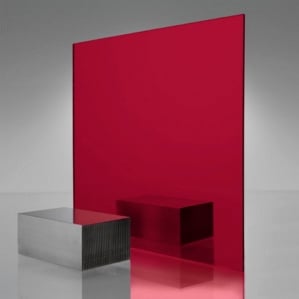
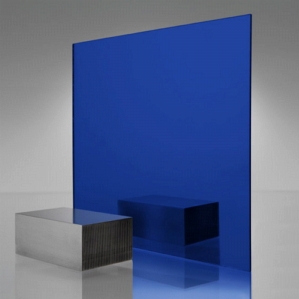
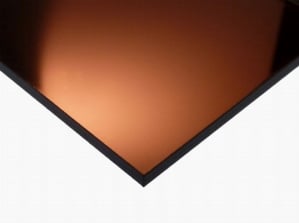
Extruded acrylic mirror sheet is manufactured from continuously processed acrylic with a reflective mirror backing. It provides excellent optical properties and impact resistance while remaining significantly lighter than traditional glass.
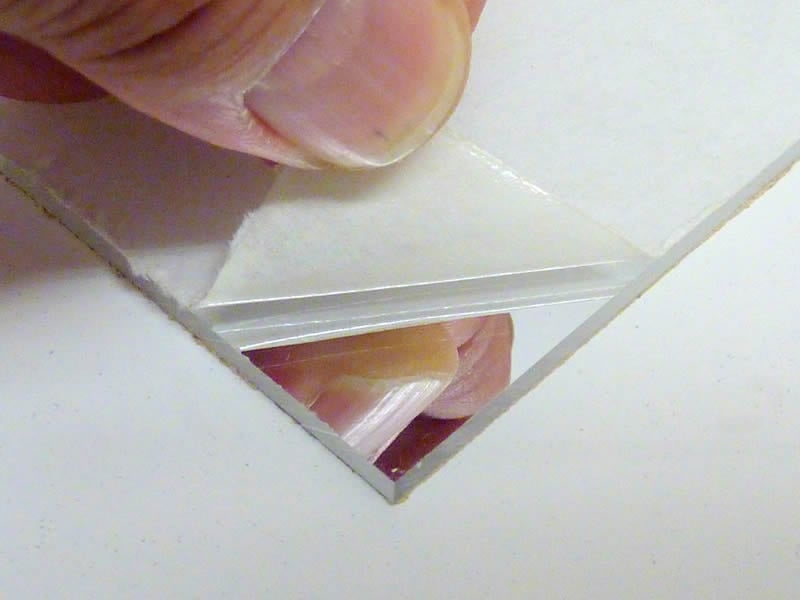
Featuring a durable paint backing and protective front masking, this material is designed to help preserve the mirror finish during handling, fabrication, and installation. Applications for extruded acrylic mirror include architectural accents, point-of-purchase displays, and cosmetic applications that need a lightweight, impact-resistant surface.
Acrylic mirror is a versatile, easy-to-machine alternative to glass. It is the correct choice if you need:
Impact Resistance:
Approximately 5 times more break resistant than glass of equal thickness, reducing the risk of breakage.
Lightweight Design:
Easier to handle, transport, and install compared to traditional glass mirrors.
UV-Stabilized Acrylic Substrate:
The acrylic substrate offers good optical clarity and UV stability, but is primarily intended for indoor or protected applications.
Protective Backing:
Features a durable paint backing and removable front masking to help protect the sheet during handling, fabrication, and installation.
Acrylic Mirror vs. Glass: Which Do You Need?
While both materials provide reflective surfaces, they are suited for different applications.
Choose Acrylic Mirror (This Sheet) if you require a lightweight, shatter-resistant material that is easy to cut and fabricate for displays, toys, or interior accents.
Choose Glass if you need a flatter, more precise reflection, particularly across a large area. Acrylic is flexible and may cause a "funhouse" image distortion if not mounted to a flat, solid surface.
Fabrication & Machining
This acrylic sheet can be sawed, routed, drilled, and laser cut. Forming and adhesive bonding require additional considerations to protect the sheet's mirrored backing and reflective appearance.
Note: This material is not recommended for large installations unless properly mounted to a flat, solid surface, as its natural flexibility can cause bowing and visual distortion.
WARNING: This product can expose you to chemicals including Ethyl acrylate, CAS 140-88-5, which are known to the State of California to cause cancer. For more information go to www.P65Warnings.ca.gov.
Handling: Cut sheets may have sharp edges. We recommend wearing protective gloves when unpacking and handling this material to ensure safety.
Suitability: We take pride in the quality of our materials as they leave our facility. However, because every project is unique, we cannot account for how materials are modified, stored, or used after delivery. Please perform the necessary tests to ensure this material is right for your specific application and end-use conditions.
ACRCLEESH
Technical Performance
This clear extruded acrylic mirror is engineered for applications requiring excellent optical clarity, reliable impact resistance, and ease of fabrication.
Break Resistance:
Approximately 5 times more break resistant than traditional glass of equal thickness.
Environmental Considerations:
Best suited for indoor or protected applications. Outdoor exposure, high humidity, and unsupported mounting may contribute to warpage or reflective distortion.
Key Properties
Optical Properties:
Excellent clarity and reflectivity designed for architectural and display use.
Reflectivity:
Provides approximately 85–90% reflectivity across the visible light spectrum for display, decorative, and visual merchandising applications.
Fabrication Ready:
Can be sawed, routed, drilled, and laser cut. Gentle cold bending and controlled line bending are possible; test adhesives on a sample before bonding.
Common Industrial Applications
Retail & Merchandising: Slatwalls, point-of-purchase displays, and cosmetic displays.
Entertainment & Leisure: Casinos, children's toys, and art installations.
Commercial Decor: Decorative panels, visual displays, menu board accents, and protected interior signage.
General Use: Decorative paneling, interior signage, architectural accents, and shatter-resistant gym or studio mirrors (when properly mounted).
Installation & Care
Though acrylic mirror is more durable than glass, installation and care requirements should be taken into consideration:
Optical Flatness and Mounting: Acrylic mirror is more flexible than glass and can bow or distort reflected images when unsupported, especially in larger panels. Installation Requirement: Mount the sheet continuously against a flat, rigid substrate using mirror-compatible materials and allow for normal thermal expansion. Glass mirror is the preferred alternative when you need a precise or consistently flat installation.
Surface Scratch Resistance: Acrylic mirror is softer than glass and can scratch if cleaned with abrasive products or handled without care. Care Requirement: Keep the protective masking on during fabrication and use nonabrasive cleaners and soft cloths on the finished surface.





 WARNING: This product can expose you to chemicals including Ethyl acrylate, CAS 140-88-5, which are known to the State of California to cause cancer. For more information go to