Sales & support: (855) 801-6333

High Impact Polystyrene (HIPS) & Styrene Sheets

Cut-to-size HIPS plastic and styrene sheets provide exceptional dimensional stability and impact strength for fabrication and prototyping. Interstate Plastics stocks High Impact Polystyrene in standard white and eco-friendly Renovo-HIPS™ grades, engineered for consistent machinability, outstanding thermoforming, and superior print adhesion.


What is High Impact Polystyrene (HIPS)?

High Impact Polystyrene (HIPS) is a durable, cost-effective thermoplastic known for its good machinability and impact resistance. Often sold as styrene sheet, it is dimensionally stable, odorless, and easy to fabricate, paint, and glue. These properties make it a popular choice for prototypes, signage, and low-strength structural components where affordability and toughness are required.


  • Highly cost-effective
  • Easy to paint and print
  • Easily assembled with adhesives or solvent cements
  • Outstanding thermoforming and vacuum-forming characteristics
  • Superior machinability and ease of fabrication
  • High impact resistance compared to standard polystyrene

[Renovo-HIPS™ PDF Spec Sheet]

[HIPS PDF Spec Sheet]

Common Applications for Styrene Sheets

High impact polystyrene is found in a wide variety of familiar consumer and industrial products. As a versatile and easy to thermoform material, it is heavily utilized for food packaging, appliance liners, retail point-of-purchase (POP) displays, and indoor signage.

Its good dimensional stability makes it an ideal substrate for prototypes, vacuum-formed parts, architectural models, boxes, toys, and printed graphics.

HIPS Plastic Physical Properties & Specifications

Specific Gravity1.04
Flexural Modulus310 ksi
Flexural Strength7,000 psi
Hardness-RockwellM75
Izod Impact Strength
Notched @ 73°F

2.8 ft/lb-in.
Tensile Elongation52%
Tensile Modulus270 ksi
Tensile Strength3,500 psi
Coefficient of Thermal Expansion4.5 x 10-5 in/in./°F
Heat Deflection Temp.196°F @ 264 psi

*Values listed are typical and are meant only as a guide to aid in design. Field testing should be performed to find the actual values for your application.

Frequently Asked Questions About HIPS

What is High Impact Polystyrene (HIPS) and how does it differ from standard polystyrene?
Standard polystyrene (GPPS) is a rigid, clear, but highly brittle plastic. To make it more durable, it is blended with rubber (typically polybutadiene). This creates High Impact Polystyrene (HIPS), which is opaque, significantly tougher, and highly impact-resistant.
What is HIPS commonly used for?
HIPS is widely used for food packaging (like yogurt cups and deli containers), retail point-of-purchase (POP) displays, indoor signs, appliance liners, toys, and protective packaging due to its low cost and ease of molding.
Is HIPS recyclable?
Yes, HIPS is recyclable and is categorized under the #6 recycling resin code. It can be melted down and reformed into new products, though curbside acceptance varies by municipality.
Is HIPS safe for food contact?
Yes, some grades of HIPS are FDA-compliant for food and beverage contact. These grades are ideal for short-shelf-life food packaging, but not recommended for high-heat applications like microwaving. Confirm the specific sheet's compliance and intended temperature and food-contact conditions before ordering.
How does HIPS compare to ABS plastic?
Both are tough, inexpensive thermoplastics that can be machined and thermoformed. ABS generally offers greater impact resistance.
What are the main advantages of using HIPS?
Manufacturers prefer HIPS for its exceptional machinability, excellent dimensional stability, low cost, and a surface finish that is incredibly easy to paint, glue, and print on.
What are the disadvantages or limitations of HIPS?
HIPS has low heat resistance, poor chemical resistance to harsh solvents, and poor UV resistance, meaning it will degrade, yellow, and become brittle if exposed to direct sunlight for extended periods.
Is High Impact Polystyrene biodegradable?
No. Like most conventional plastics derived from fossil fuels, HIPS is not biodegradable and can take hundreds of years to break down in a landfill, making recycling highly recommended.
Can HIPS be easily printed, painted, or glued?
Absolutely. HIPS is a fantastic substrate for screen printing and lithography. It can also be easily assembled or bonded using mechanical fasteners, adhesives, or solvent cements.
Is HIPS toxic?
In its final solid form, HIPS is safe to handle. However, during the manufacturing or thermoforming process, heating the plastic can release volatile organic compounds (VOCs) and requires proper industrial ventilation.

High Impact Polystyrene Sheets (Standard & Recycled)

Styrene Template Kits & Material Samples

Fabrication Tools & Adhesives for Styrene

Designed to cut styrene so smoothly that edges can be polished.
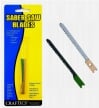
Saber Saw Blades

Prop 65 Warning WARNING: This product can expose you to chemicals including 1,3-Butadiene, CAS 106-99-0, which are known to the State of California to cause cancer, birth defects, or other reproductive harm. For more information go to www.P65Warnings.ca.gov.

Prop 65 Warning WARNING: This product can expose you to chemicals including Styrene, CAS 100-42-5, which are known to the State of California to cause cancer. For more information go to www.P65Warnings.ca.gov.


Interstate Plastics Suppliers