As per our Shipping and Returns Policy, custom cuts and fabricated parts are non-returnable. If you need an over- or undersized item, note it under "Comments" during Checkout. Cut-to-size orders have an acceptable cut tolerance of 1/8" (0.125"), so clarify if the adjustment is to be made on the (+) or (-) side of the saw blade.Please review our full return and shipping policy here.
Measure Twice, Cut Once
Since custom cuts and fabricated parts are non-refundable, be very careful while measuring your dimensions. As each cut is nominal, even the slightest miscalculation could be costly.
How to Use a Measuring Tape
Extend your tape measure several inches to find the 1 and 2 inch markers. In between the inch markers you’ll find 16 equally spaced tick marks.
Measure by counting the increments beyond the nearest inch. As the increments decrease, so does the length of the mark. For example, 1/2" has a bigger mark than 1/4" which has a bigger mark than 1/8". The smallest mark follows at 1/16". Please be aware that some measuring tapes may have even smaller increments.
Features of a Measuring Tape: Sliding End Hook
The sliding end hook is designed for two different types of measurements. An outside measurement (where the hook of the tape hangs over an edge), requires the hook to slide out a bit to account for the thickness of the material. When making an inside measurement (where the hook will push up against a surface), the clip slides in, again, accounting for its thickness. The measuring tape self-adjusts to guarantee an accurate measurement (as far as the tape is concerned).
Sanitizing Acrylic and Polycarbonate Sheet [X]
Acrylic and Polycarbonate Sneeze Guards and like products require special care while cleaning and disinfecting. To maintain the optical clarity of sneeze guards and other acrylic or polycarbonate items, use an acrylic or polycarbonate safe cleaner like Novus Plastic Polish #1, Brillianize Plastic Cleaner, or a mild soap solution.
Please reference the following compatible cleaners when DISINFECTING acrylic and polycarbonate items. The use of commonly available commercial alcohol or ammonia-based disinfectants may cause crazing and damage.
Clear, Flame-Rated CPVC for Cleanroom Viewing Windows
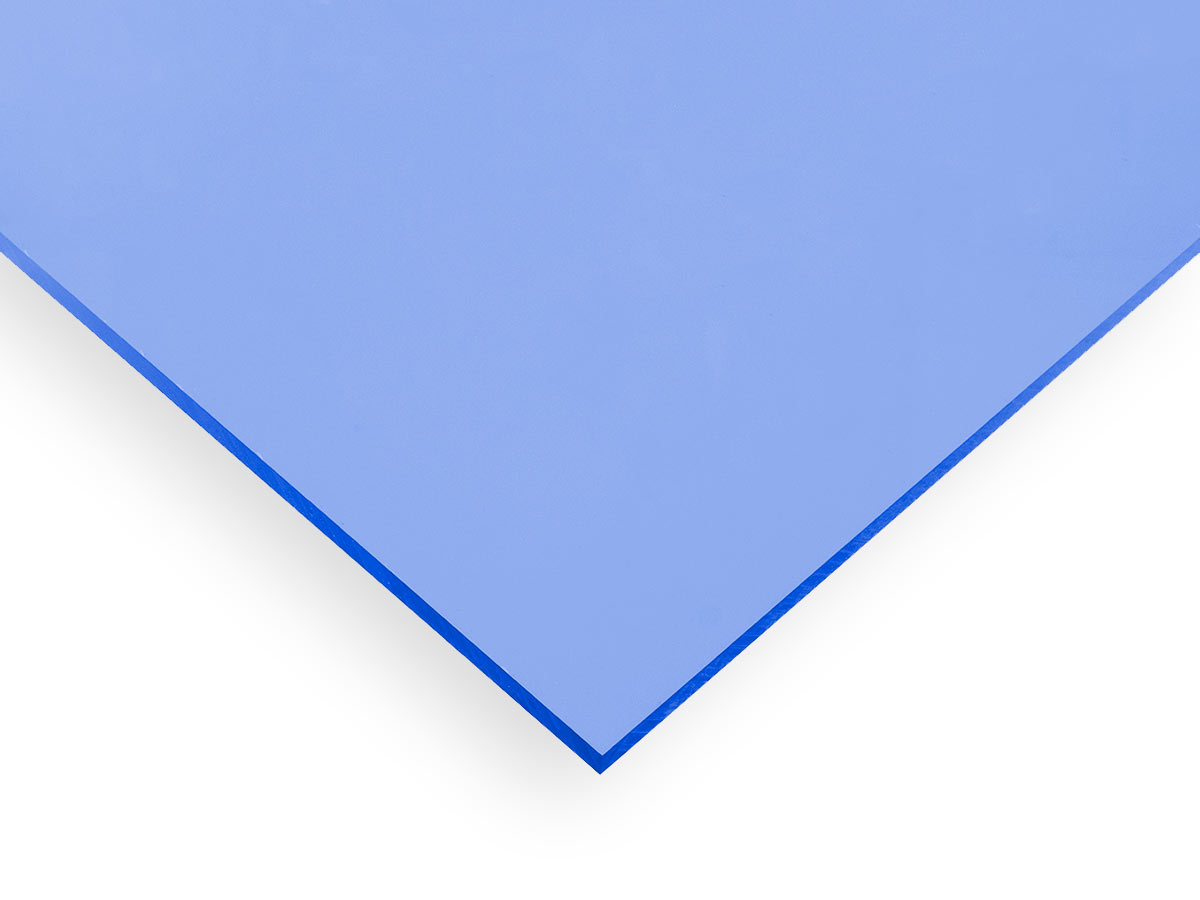
LAM 2000® CPVC clear/blue sheet is an FM 4910-listed material that meets UL 94 V-0 requirements and carries an ASTM E84 Class A classification. This transparent, light-blue-tinted "window grade" CPVC is used for semiconductor cleanroom equipment viewing windows, access panels, and transparent glazing.
LAM 2000 CPVC combines high light transmission with resistance to acids, oxidizers, and moderately aggressive alkaline environments. A maximum continuous service temperature of 195°F and documented flame-performance classifications make it suitable for applications where visibility, chemical compatibility, and material fire characteristics must be considered together.
Need an opaque option for industrial fabrication? See our Gray CPVC sheet.
Why Choose This Specific Sheet?
LAM 2000 is designed for transparent equipment, cleanroom, and data center applications that require a documented combination of flame performance, chemical resistance, and visibility. It is typically considered when you need:
FM 4910 Listing:
Specified for applications such as semiconductor cleanroom equipment where FM 4910-listed nonmetallic materials may be required.
UL 94 V-0 Classification:
Meets UL 94 V-0 requirements for material flammability under the applicable test conditions.
ASTM E84 Class A:
Provides a documented Class A surface-burning classification and may be used for transparent glazing and partition applications.
Clear Window-Grade Construction:
Offers high light transmission with a slight blue tint for equipment viewing windows, access panels, and transparent partitions.
Chemical Resistance:
Performs well around acids, oxidizers, and moderately aggressive alkalines when compatibility is confirmed for the specific service conditions.
LAM 2000 CPVC vs. Standard Clear PVC: Which Do You Need?
Both materials can provide transparent viewing surfaces, but their temperature capability and grade-specific fire classifications differ.
Choose LAM 2000 CPVC (This Sheet) when your application calls for its documented FM 4910 listing, UL 94 V-0 classification, ASTM E84 Class A rating, chemical resistance, or service temperatures up to 195°F.
Choose standard clear PVC for general transparent guards or viewing panels when LAM 2000's ratings and elevated CPVC service temperature are not required.
Fabrication & Installation
LAM 2000 CPVC can be joined using compatible adhesive or solvent systems or installed with mechanical fasteners. Adhesive compatibility, fastener design, thermal expansion, chemical exposure, temperature, and applied stress can affect finished-part performance, so the proposed attachment method should be tested under actual service conditions before production use.
Material Warnings
WARNING: This product can expose you to chemicals including Polyvinyl Chloride, CAS 9002-86-2, which are known to the State of California to cause cancer. For more information go to www.P65Warnings.ca.gov.
Handling: Cut sheets may have sharp edges. We recommend wearing protective gloves when unpacking and handling this material to ensure safety.
Suitability: We take pride in the quality of our materials as they leave our facility. However, because every project is unique, we cannot account for how materials are modified, stored, or used after delivery. Please perform the necessary tests to ensure this material is right for your specific application and end-use conditions.
CPVC2 SH
Technical Performance
LAM 2000 CPVC is a clear, light-blue-tinted chlorinated PVC sheet with documented flame classifications, chemical resistance, and elevated-temperature capability for cleanroom viewing and transparent glazing applications. Published values are typical properties, and finished applications should be tested under actual service conditions.
Meets FM 4910 and UL 94 V-0 requirements and carries an ASTM E84 Class A rating for applications where documented flame and surface-burning performance is required.
Optical Clarity:
Clear window-grade CPVC with a slight blue tint provides high light transmission for equipment viewing windows, access panels, and transparent partitions.
Chemical Resistance:
Performs well in environments containing acids, oxidizers, and moderately aggressive alkalines, making it suitable for many cleanroom and process-equipment applications.
Key Properties
FM 4910 Listed:
Listed for FM 4910, supporting specification in semiconductor cleanroom equipment and other applications requiring this material classification.
UL 94 V-0:
Meets UL 94 V-0 requirements under the applicable material flammability test conditions.
ASTM E84 Class A:
Class A surface-burning classification supports its use in applications such as transparent data center glazing and partitions when appropriate for the project requirements.
High Light Transmission:
Clear window-grade construction with a slight blue tint provides visibility for equipment windows, covers, guards, and partitions.
Composition & Chemical Resistance:
Performs well around acids, oxidizers, and moderately aggressive alkalines and is reported to contain no lead, heavy metals, or other EPA SARA 313 reportable components.
Common Industrial Applications
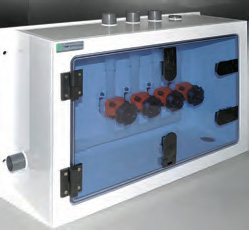
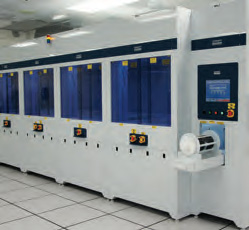
Semiconductor Cleanroom Equipment: Viewing windows and sight panels for equipment where transparency, chemical resistance, and FM 4910-listed material may be required.
Data Center Glazing: Transparent windows and partitions where the material's ASTM E84 Class A classification aligns with project specifications.
Equipment Access & Protection: Clear access panels, covers, and guards that maintain visibility into equipment or process areas.
Transparent Process Glazing: Viewing panels for laboratory and chemical-processing environments when the specific chemical, temperature, and stress conditions are compatible with CPVC.
Engineering Limitations & Alternatives
LAM 2000 is formulated around transparent glazing, cleanroom use, and its documented fire classifications. Applications with more aggressive chemistry, higher continuous temperatures, or no requirement for transparency may justify a different material.
Aggressive Chemical Exposure: Chemical resistance depends on the exact chemical, concentration, temperature, applied stress, and exposure time. Compatibility should be verified rather than assumed from general CPVC resistance data. Better Alternative: For applications requiring broader chemical resistance and no transparency, consider Halar® ECTFE and confirm the specific grade against the service environment.
Continuous Service Above 195°F: LAM 2000 has a maximum continuous service temperature of 195°F, so higher-temperature applications require another material evaluation. Better Alternative: For higher-temperature, opaque cleanroom and chemical-service components, consider PVDF Kynar® 740.
Transparency Not Required: The clear, blue-tinted window grade can be unnecessary for opaque cabinets, enclosures, or structural cleanroom panels. Better Alternative: For opaque FM 4910-listed PVC cleanroom panels, consider LAM CRP-1 if service temperature ranges allow for it.



 WARNING: This product can expose you to chemicals including Polyvinyl Chloride, CAS 9002-86-2, which are known to the State of California to cause cancer. For more information go to