
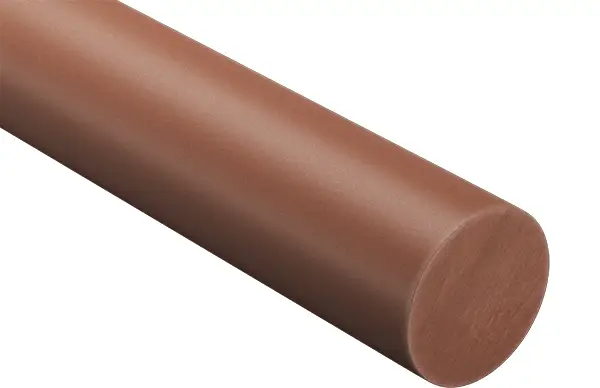
Sales & support: (855) 801-6333

Acetal Sheet, Rod & Tube (Delrin®/POM)

Buy cut-to-size acetal (Delrin®/POM) sheet, rod, and tube in homopolymer and copolymer grades, including AF/PTFE bearing blends and ESD variants for tight-tolerance parts.


Get A Quote

What is Acetal/Delrin® (POM)?

Acetal, or polyoxymethylene (POM), is an engineering thermoplastic used in the creation of precision parts requiring high stiffness, low friction, and excellent dimensional stability.

Known for its extreme toughness, machinability, low moisture absorption, and dimensional stability, acetal is a popular replacement for metal components in the automotive, mechanical, electrical, food and beverage, and medical industries.

Acetal plastic is also known by brand names like Delrin® (acetal homopolymer), Tecaform®, and Sustarin®.

Key Benefits & Material Characteristics

  • High mechanical strength and stiffness for heavy-duty applications
  • Excellent dimensional stability (ideal for close-tolerance CNC machining)
  • Low coefficient of friction (natural lubricity for moving parts)
  • Consistent physical properties in wet or moist environments
  • Extremely low moisture absorption
  • FDA, NSF, and USDA compliant food-safe grades available

Copolymer vs. Homopolymer (Acetal vs. Delrin®)

Understanding the difference between standard acetal and Delrin® is important for selecting the right material:

  • Acetal Copolymer (POM-C): Copolymer acetal is the industry standard for general acetal. It features no centerline porosity (microscopic voids), making it a better choice over homopolymer for food routing and medical applications. POM-C offers superior chemical resistance to hot water and high pH (basic) solutions compared to homopolymers.
  • Acetal Homopolymer (Delrin® / POM-H): Delrin® is the well-known brand name for homopolymer acetal. Compared with standard copolymer grades, homopolymer generally offers higher room-temperature strength and stiffness due to its higher crystallinity. This grade can exhibit centerline porosity.

Both grades perform well in wet environments and offer natural food-contact compliant (FDA/USDA) variations.

Key Physical & Mechanical Properties (Unfilled Acetal/Delrin®)

Property Acetal
Copolymer (POM-C)
Delrin®
Homopolymer (POM-H)
Specific Gravity 1.411.42
Water Absorption @ 24 hrs. 0.20%0.25%
Tensile Strength 9,800 psi 10,000 psi
Tensile Modulus 430 ksi 450 ksi
Elongation 75% 75%
Flexural Strength 13,000 psi 14,300 psi
Flexural Modulus 370 ksi 420 ksi
Izod Impact, Notched 1 ft-lb/in. 1.5 ft-lb/in.
Hardness, Rockwell M80 M89/R121
Dielectric Strength (V/mil) 500 500

*Values listed are typical and are meant only as a guide to aid in design. Field testing should be performed to find the actual values for your application.

Frequently Asked Questions About Acetal & Delrin®

What is acetal plastic (POM)?
Acetal, chemically known as polyoxymethylene (POM), is a high-performance engineering thermoplastic. With high strength, low friction, excellent dimensional stability, and outstanding wear resistance, acetal is an excellent lightweight replacement for metal in many mechanical applications.
Acetal vs. Delrin®: What is the difference?
Acetal is the general family name for the plastic (POM), while Delrin® is a specific trademarked brand name owned by Delrin USA, LLC. Acetal usually refers to the copolymer version (POM-C), whereas Delrin is the homopolymer version (POM-H). All Delrin is acetal, but not all acetal is Delrin.
Acetal Copolymer vs. Homopolymer: Which is better?
The better choice depends on the application. Copolymer acetal generally offers better resistance to hot water and alkaline solutions and tends to have less centerline porosity. Homopolymer acetal, including Delrin®, generally offers higher room-temperature strength and stiffness.
What is acetal used for?
Due to its natural lubricity (low friction) and high durability, acetal is heavily used in mechanical and moving parts. Common applications include gears, bearings, bushings, rollers, conveyor chains, fuel system components, electrical insulators, safety buckles, and heavy-duty plastic zippers.
Is acetal food safe?
Selected grades of acetal copolymer and homopolymer meet applicable FDA requirements for food-contact applications. Suitability depends on the specific formulation, including additives and colorants, as well as the food type, contact temperature, and exposure time.
Acetal vs. Nylon: Which should I choose?
Nylon is often selected for tough, load-bearing wear parts, but moisture absorption can change its dimensions and mechanical properties. Acetal absorbs less moisture, making it the better choice for precision parts that operate in wet or humid conditions.
Is acetal easy to machine?
Machinists consistently rank acetal as one of the easiest and most stable plastics to machine. It chips predictably and holds tight tolerances during common processes such as CNC machining, milling, turning, and drilling.
Can you glue or bond acetal?
Acetal is difficult to bond with conventional adhesives because of its low surface energy and chemical resistance. Reliable bonding may require a specialized adhesive system and appopriate surface preparation. Mechanical fastening is the preferred alternative.
Is acetal heat resistant?
Acetal holds up well to moderate heat but is not designed for extreme high-temperature environments. It generally has a continuous operating temperature rating of roughly 195°F (91°C).
Does acetal absorb water?
One of acetal's biggest advantages over many engineering plastics is its extremely low moisture absorption rate (typically ~0.25% over 24 hours). This helps acetal maintain its shape in wet environments, making it a strong choice for many wet, washdown, marine, and plumbing-related components.

Acetal Sheet — Copolymer (POM-C), General Purpose

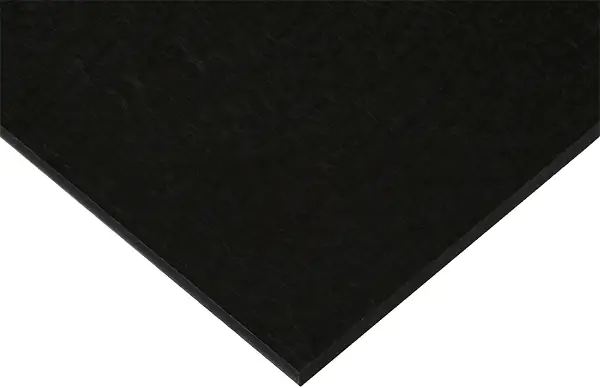
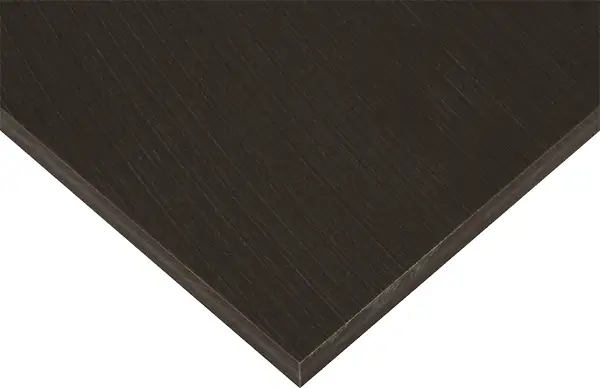
Black acetal copolymer sheet offers low friction and good wear resistance for machined slide guides, wear plates, and equipment components.
Acetal Sheet - Black Extruded

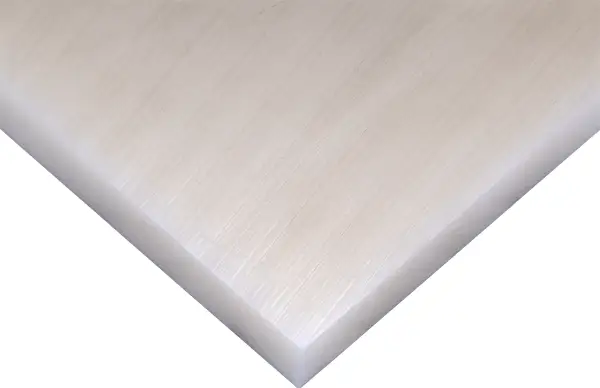
Natural acetal sheet combines low moisture absorption with easy machinability for dimensionally stable fixtures, mounting plates, and precision parts.
Acetal Sheet - Natural Extruded

Delrin® Sheet — Homopolymer (POM-H)

Black Delrin® homopolymer sheet supplies strength and stiffness for machined gears, structural brackets, and mechanical fixtures.

Delrin Sheet - Black

Natural Delrin® sheet machines into precision components that need low friction, rigidity, and resistance to repeated loading.

Delrin Sheet - Natural

Acetal Rod — Copolymer (POM-C), General Purpose

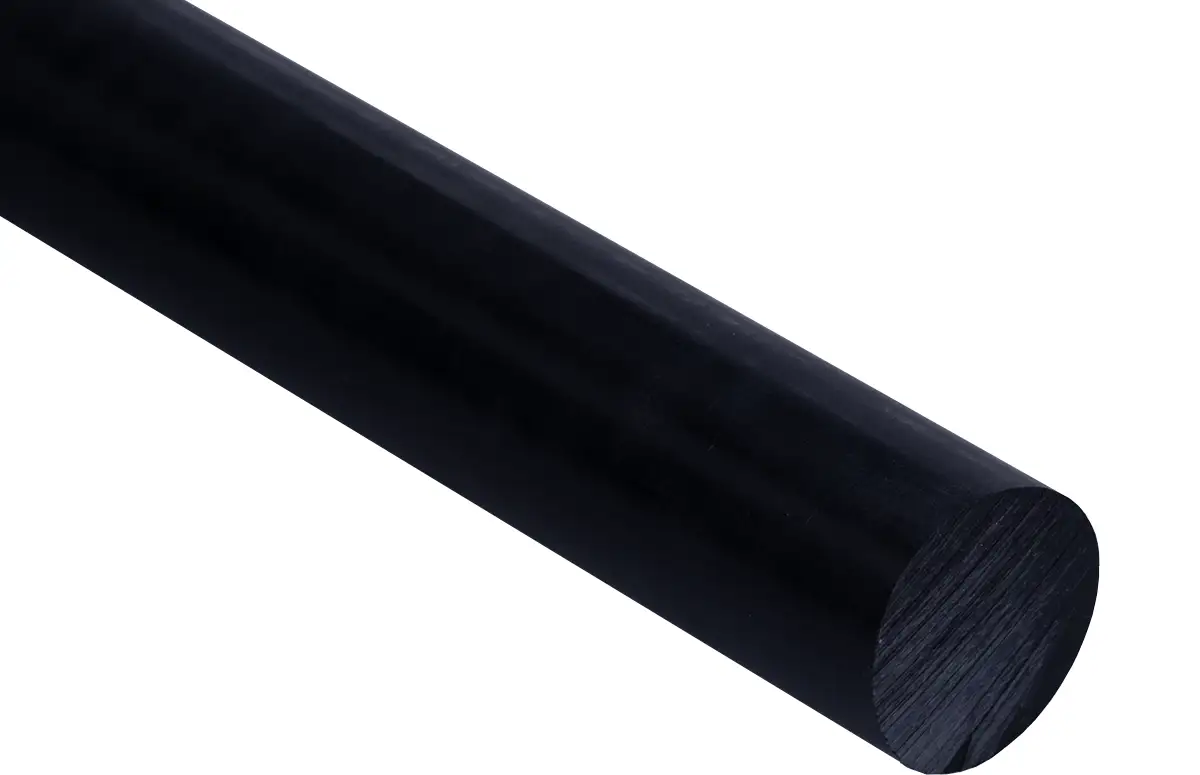
Black copolymer acetal rod combines good wear resistance and low friction for turned bushings, rollers, and spacers.
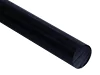
Acetal Rod - Black

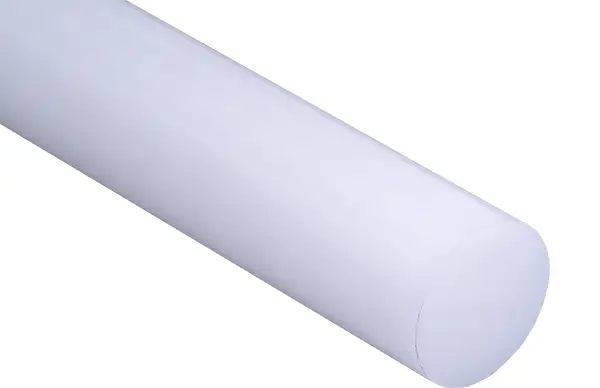
Low moisture absorption helps natural acetal rod maintain dimensional stability in machined shafts, pins, and other cylindrical parts.
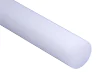
Acetal Rod - Natural

Delrin® Rod — Homopolymer (POM-H)

Acetal Tube — Copolymer (POM-C)

Natural acetal copolymer tube provides hollow stock for sleeves, bushings, and rollers, reducing bore machining compared with solid rod.

Acetal Tube | Natural Copolymer

Specialty Acetal Sheet — FDA, ESD, Detectable

Blue FDA-compliant acetal sheet offers low moisture absorption for machined food-processing guides, wear strips, and equipment parts.

FDA Compliant Blue Acetal Sheet

Natural ESD acetal sheet helps dissipate static charge in machined fixtures and components for static-sensitive equipment.
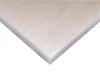
Acetal Sheet ESD Natural

PTFE-filled acetal AF blend sheet improves sliding performance and wear resistance for machined wear pads, guides, and bearing components.
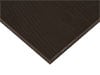
Acetal Sheet - 13% AF Blend

Ultra-detectable TECAFORM AH UD blue plate is formulated for optical, metal, and X-ray detection in food-processing applications.

TECAFORM AH UD Blue Plate

Specialty Acetal Rod — FDA, ESD, UV/Bearing

FDA-compliant blue acetal rod machines into food-contact bushings, rollers, and spacers; its color aids visual identification against many foods.

FDA Compliant Blue Acetal Rod

TECAFORM AH UD blue rod combines machinability with metal- and X-ray-detectable additives for food-contact parts such as rollers and bushings.

TECAFORM AH UD Blue Rod

Acetal rod with a 13% PTFE blend offers reduced friction for turned bearings, sleeves, and other sliding parts.

Acetal Rod - 13% AF Blend

Turcite® A & X Rod — Acetal-Based, Internally Lubricated

Turcite® A is an internally lubricated acetal-based rod for machined bearings and sliding components that require good wear resistance.

Turcite Rod - A

Turcite® X rod provides a self-lubricating stock shape for low-friction bushings, sleeves, and other moving mechanical parts.

Turcite Rod - X

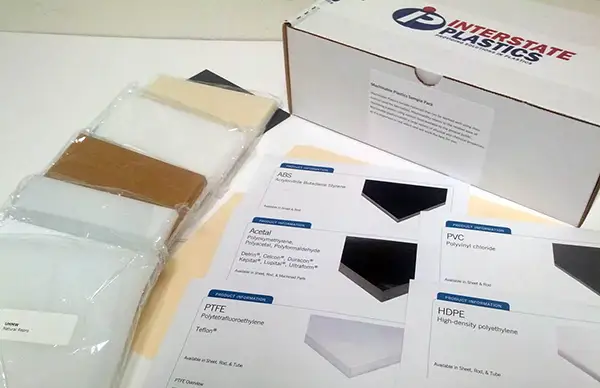
Material Sample Packs — Selection & Testing

Acetal Machining & Fabrication Tools

Prop 65 Warning WARNING: This product can expose you to chemicals including Formaldehyde, CAS 50-00-0, which are known to the State of California to cause cancer. For more information go to www.P65Warnings.ca.gov.

Prop 65 Warning WARNING: This product can expose you to chemicals including Hexachlorobenzene, CAS 118-74-1, which are known to the State of California to cause birth defects or other reproductive harm. For more information go to www.P65Warnings.ca.gov.




Interstate Plastics Suppliers