UHMW vs HDPE: Key Differences Explained
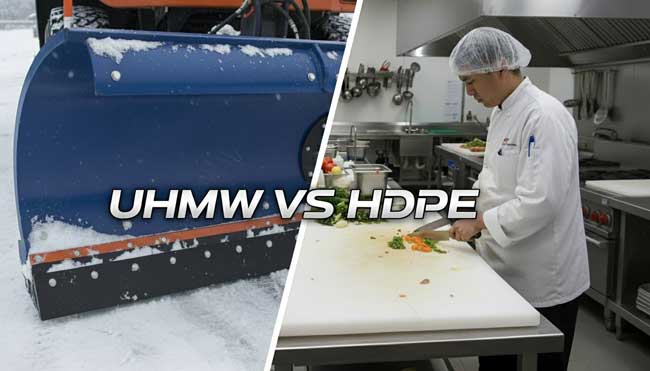 Ultra-High Molecular Weight Polyethylene (UHMW) and High-Density Polyethylene (HDPE) share similar chemical properties but serve distinct roles. UHMW is the premium choice for extreme impact and sliding abrasion, whereas HDPE offers excellent chemical resistance and weldability at a more economical price point.
In this guide from Interstate Plastics, we break down the critical differences (including impact strength, abrasion resistance, and fabrication methods) to help you determine which polyethylene offers the right balance of performance and value for your specific application.
Material Properties Comparison
 When evaluating HDPE vs UHMW, several key characteristics stand out:
- Machinability & Fabrication: Among HDPE material properties, its ease of machining and weldability stand out. HDPE cuts cleanly, thermoforms, and holds tolerances better than UHMW, which is more difficult to machine due to its toughness. HDPE even machines much like wood and can be cut, drilled, or routed with standard woodworking tools.
- Strength & Stiffness: HDPE has higher tensile strength (~4,000 psi) and greater rigidity than UHMW (~3,100 psi). UHMW is softer but absorbs impact without cracking.
- Impact Resistance: UHMW excels at withstanding repeated heavy blows, while HDPE performs well but cannot match UHMW in extreme impact scenarios.
- Wear Resistance: UHMW's extremely low coefficient of friction (CoF 0.10–0.14) makes it ideal for sliding or abrasive conditions. HDPE also resists wear, but UHMW can last up to 10 times longer in high-friction applications.
- Temperature Range: Both plastics soften under heat but perform well in freezing conditions. UHMW tolerates cryogenic use and slightly higher continuous service temperatures than HDPE.
- Chemical & Moisture Resistance: Both are nearly inert to chemicals and absorb little to no water, making them reliable for tanks, liners, and wet environments.
- Cost: One of the key high density polyethylene advantages is price. HDPE is two to four times less expensive than UHMW, making it more economical for large or structural parts.
Applications Across Industries

- Food Processing: HDPE is used in cutting boards and containers, while UHMW is preferred for high-wear components like guide rails and scraper blades. Both UHMW and HDPE meet FDA, USDA, and NSF requirements for food contact in their virgin, unmodified forms.
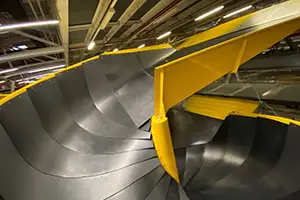
- Conveyors & Material Handling: UHMW is the standard for conveyor wear strips, chain guides, and rollers due to its abrasion resistance. HDPE is suitable for lighter-duty conveyors where budget is more important than wear life.
- Lumber Processing: UHMW withstands abrasive wood fibers and impacts better than HDPE, extending equipment life in sawmills.
- Automotive Applications: UHMW is used for wear plates, pads, and bushings to protect parts from abrasion and impact. HDPE is common in thermoformed tanks, housings, and covers where rigidity and weldability matter.
- Industrial Machinery: UHMW provides durable guide rails and bushings that reduce noise and maintenance. HDPE is often chosen for guards, panels, and enclosures that need structural strength at lower cost. Because HDPE machines easily with woodworking tools, it's often selected for guards, panels, and enclosures that can be fabricated quickly and affordably.
- Marine Applications: The high density polyethylene advantages of water resistance and durability make HDPE ideal for docks, marine boards (also known by the brand name Starboard®), and cabinetry. UHMW is used for dock fenders and bumpers that absorb heavy impacts.
- Mining Applications: UHMW is preferred for liners in hoppers, chutes, and truck beds where abrasion and impact are extreme. HDPE is widely used for piping and containment where chemical resistance and affordability are priorities.
UHMW vs HDPE in Conveyor Applications
 Conveyors highlight the differences in HDPE vs UHMW performance. UHMW guide rails and wear strips last significantly longer, reduce noise, and eliminate the need for lubricants. HDPE rails provide a smooth, non-stick surface at lower cost, but they wear out faster in high-load or high-speed conditions. Interstate Plastics offers custom extruded UHMW profiles such as snap-on rails, J-legs, and C-channels for conveyors, ensuring reliable long-term performance.
Expert Guidance on UHMW vs HDPE
Selecting between UHMW and HDPE requires balancing performance, cost, and fabrication needs. Interstate Plastics stocks both materials in multiple grades, including FDA-approved, UV-stabilized, reprocessed, and anti-static options. With over 45 years of experience and 10 locations nationwide, we provide cut-to-size services, CNC machining, and full fabrication support.
Contact Interstate Plastics today for expert guidance, fast shipping, and the right material choice for your next project.
This guide was authored by Christopher Isar and reviewed for technical accuracy by Chris Clark.

About the Author
At Interstate Advanced Materials, Christopher Isar turns "it depends" into "do this." Since 2011, he's helped buyers choose plastics with confidence by focusing on what works on the shop floor and in the field, backed by IAPD Level 2 certification. If your project can't miss, Chris will guide you to cost-effective, real-world options. Contact Chris.