Sales & support: (855) 801-6333

ABS Plastic Sheet & Rod

Buy cut-to-size ABS sheet & rod in machine-grade for tight-tolerance machining & impact strength, & in extruded for durable, thermoformable panels & parts.


Get A Quote

What Is ABS Plastic?

Acrylonitrile Butadiene Styrene (ABS) is an opaque, amorphous thermoplastic polymer known for its balanced combination of high impact strength, mechanical toughness, and excellent machinability. It is easily fabricated, thermoformed, and bonded, making it a go-to material for both heavy-duty industrial components and consumer goods.

ABS is an ideal material for turning, drilling, milling, sawing, and die-cutting. It can be bonded to itself using ABS solvent cement and can also be joined with specialty plastic adhesives depending on the application. ABS can also be line bent with standard heat strips.


  • Superior Machinability: Cuts clean with standard tooling.
  • High Impact Strength: Resists cracking even at sub-zero temperatures (-40°F).
  • Excellent Thermoformability: Ideal for vacuum forming panels and housings.
  • Chemical Resistance: Resists many aqueous acids and alkalis, depending on concentration, temperature, and exposure conditions.
  • Electrical Insulation: Good dielectric properties for electronics housings.

Choosing Your Material: Machine Grade vs. General-Purpose ABS

ABS plastic sheets and rods are manufactured in two different grades:

Machine-grade ABS is produced for machining applications where dimensional stability and consistency are important. Annealed stock helps reduce residual stresses and the risk of distortion during machining.

  • Best For: CNC turning, milling, and complex machined parts.
  • Common Uses: Fluid handling components, manifolds, prototypes, and tight-tolerance spacers.

General-purpose extruded ABS is more cost-effective and better-suited for thermoforming, vacuum forming, and general fabrication. While extruded ABS can be machined for basic features, it is not the best choice for close-tolerance parts compared to machine grade ABS because residual stress may cause movement or warping during machining.

  • Best For: Thermoforming, vacuum forming, and structural panels.
  • Common Uses: Automotive interiors, appliance housings, luggage carriers, and drain-waste vent (DWV) pipes.

ABS Typical Material Properties

Property Typical Value
Specific Gravity 1.04
Water Absorption @ 24 hrs. 0.3%
Tensile Strength 4,100 psi
Flexural Strength 9,100 psi
Tensile Modulus 294 ksi
Flexural Modulus 304 ksi
Hardness, Rockwell R102
Izod Impact, Notched 7.7 ft-lbs/in.
Heat Deflection Temp (264 psi) 177°F

*Values listed are typical and are meant only as a guide to aid in design. Field testing should be performed to find the actual values for your application.

Frequently Asked Questions About ABS

What does ABS stand for?
ABS stands for Acrylonitrile Butadiene Styrene, a tough, durable thermoplastic polymer made from these three distinct monomers. ABS combines strength, gloss, and impact resistance.
Is ABS plastic toxic?
ABS is generally stable and safe for normal handling. However, when melted or 3D printed, it can release fumes or vapors containing styrene, which can be irritating. Use proper ventilation or an enclosure equipped with suitable exhaust or filtration when heating or printing ABS.
What is ABS plastic used for?
Common ABS applications include automotive interior trim and components, protective headgear (like hard hats), computer keyboard caps, electronic housings, luggage, and household plumbing.
How do you glue ABS plastic?
ABS can be joined with compatible ABS solvent cement or an adhesive formulated for ABS. Solvent cement softens the mating surfaces, allowing them to fuse as the solvent evaporates. Choose the bonding method for the materials being joined, joint design, and service conditions.
How do you smooth ABS plastic?
ABS can be sanded, and some 3D-printed ABS parts can be smoothed with acetone vapor. Acetone softens and partially dissolves the surface, reducing visible layer lines but potentially rounding details or changing dimensions. Vapor smoothing requires suitable equipment and controls for flammable solvent vapors.
Is ABS plastic heat resistant?
ABS offers better heat resistance than many commodity plastics and has a glass transition temperature of approximately 221°F (105°C). For loaded applications, heat deflection temperature is usually the better design reference; typical ABS HDT values are often below its glass transition temperature and vary by grade.
Is ABS UV resistant?
Standard ABS plastic is not inherently UV resistant. Prolonged exposure to direct sunlight will cause the material to degrade, yellow, and become brittle over time. For outdoor applications, use a specialized UV-resistant grade of ABS or protect it with an opaque paint or coating.

ABS Plastic Sheet

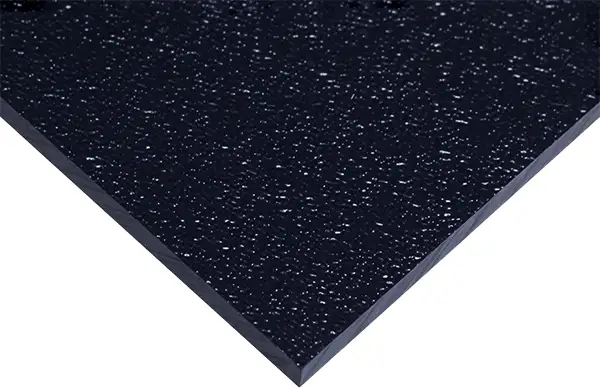
Stress-relieved and annealed for high-precision CNC milling and routing. Offers maximum impact strength in a sleek, opaque black finish.

ABS Sheet - Black Machine Grade

A cost-effective, formable thermoplastic ideal for vacuum forming, thermoforming, and structural paneling in an opaque black.
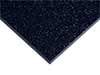
ABS Sheet - Black Extruded

ABS Plastic Rod

Tough, rigid, and annealed to prevent cracking during complex CNC turning operations. Solid opaque black coloring throughout.

ABS Rod - Black Machine Grade

ABS Welding Rods

Create seamless, high-strength bonds in black ABS fabrications. Sold by the pound in 4-foot lengths.

ABS Welding Rod - Black

Ideal for seamless repairs and structural fabrication in unpigmented, natural ABS applications. Sold by the pound in 4-foot lengths.

ABS Welding Rod - Natural

Achieve clean, color-matched welded joints for white ABS panels, pipes, and appliance housings. Sold by the pound in 4-foot lengths.

ABS Welding Rod - White

ABS Accessories & Adhesives


Prop 65 Warning WARNING: This product can expose you to chemicals including Acrylonitrile, CAS 107-13-1, which are known to the State of California to cause cancer. For more information go to www.P65Warnings.ca.gov.

Prop 65 Warning WARNING: This product can expose you to chemicals including Butadiene, CAS 106-99-0, which are known to the State of California to cause cancer and birth defects or other reproductive harm. For more information go to www.P65Warnings.ca.gov.


Prop 65 Warning WARNING: This product can expose you to chemicals including Styrene, CAS 100-42-5, which are known to the State of California to cause cancer and birth defects or other reproductive harm. For more information go to www.P65Warnings.ca.gov.


Interstate Plastics Suppliers