Seafood & Fish Processing Material Solutions
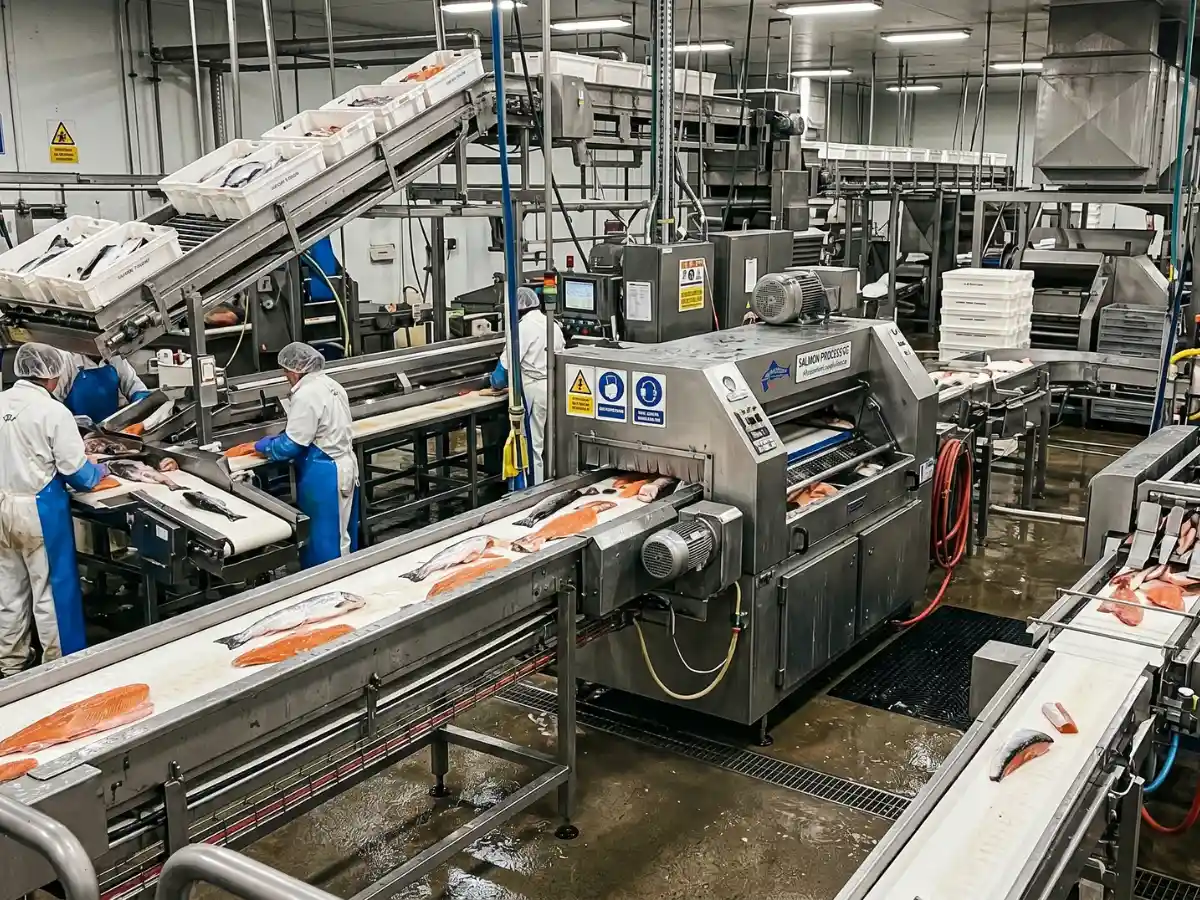 Interstate Plastics supplies high-performance, food-grade plastics engineered for extreme moisture resistance, rigorous sanitation, and long-term durability in harsh seafood processing environments. These materials resist salt, ice, and constant water exposure, which is critical in environments where salt water rapidly corrodes metal and causes rot, rust, and delamination.
We support seafood processors, fish handling facilities, and equipment manufacturers with materials that maintain structural integrity and prevent bacterial growth in the most demanding wet-room conditions.
Beyond standard sheets, tubes, and rods, we specialize in cut-to-size shapes, CNC-machined components, and fabrication-ready assemblies. By delivering reliable, precision parts such as antimicrobial HDPE cutting boards and food-safe UHMW wear strips, we help you reduce maintenance downtime, improve facility sanitation standards, and ensure your production lines stay compliant and efficient.
Key Materials for Seafood & Fish Processing
Interstate Plastics supplies materials for receiving, processing, conveying, and packaging seafood products, including:
- HDPE:
- Processing tables, cutting stations, guides, and work surfaces
- Marine Board:
- Dockside equipment, splash-zone cabinetry, and ice handling bins
- UHMW:
- Conveyor wear strips, chain guides, and wet sorting line components
- Polypropylene:
- Chemical-resistant washdown areas, drainage systems, and brine handling tanks
- Acetal:
- Precision guides and conveyor components
- Nylon:
- Mechanical components and wear parts
- PET:
- Support surfaces and wear-resistant platforms
- Polycarbonate:
- High-impact visibility panels, safety shields, and equipment enclosures
- Acrylic:
- Inspection windows, splash guards, and hygiene barriers
- ABS:
- Equipment housings and non-food-contact covers
- PTFE (Tapes & Belting):
- Sealing strips, high-temperature cooking belts, and packaging guides
HDPE for Fish Receiving Tables, Filleting Stations, and Cutting Work Surfaces
 Natural HDPE meets FDA requirements for food contact and is widely used in USDA-regulated processing environments due to its durability, moisture resistance, and suitability for direct food-contact applications. In its natural (virgin) grade, it also meets NSF Standard 51 (Food Equipment) and 61 (Potable Water), ensuring safety for both direct fish contact and processing-water delivery.
HDPE maintains its structural integrity without absorbing water, which helps prevent swelling, warping, or bacterial intrusion over time. The material retains its structural integrity in sub-zero temperatures, with many grades rated for use down to -40°C. Its impact resistance and machinability make it well suited for high-use surfaces such as fish receiving tables, sorting and grading stations, deheading and filleting surfaces, trimming tables, and deboning line work areas.
HDPE helps address challenges such as surface wear, sanitation concerns, and inconsistent cutting performance. It is commonly used for knife guides, backboards, push plates, weighing platforms, and conveyor slide bars where durability and consistency are critical, helping extend surface life, support sanitation protocols, and maintain reliable performance across seafood processing systems.
Marine Board for Dockside Receiving Tables, Ice Handling Systems, and Splash Zones
 Marine board is a marine-grade HDPE engineered for harsh, wet environments where constant exposure to water, ice, and salt is unavoidable. While marine board is designed for structural use, specific natural and “StarBoard® ST” grades meet FDA requirements for food contact and are commonly used in USDA-regulated processing applications. Unlike wood or metal, it will not rot, rust, or delaminate, making it a reliable solution for dockside and high-moisture processing areas.
Marine board retains HDPE's core properties, maintaining excellent dimensional stability and impact strength in sub-zero temperatures and under heavy loads. It's commonly used for dockside fish receiving tables, ice handling bins, and splash guards. By resisting water, chemicals, and brittleness in cold environments, it ensures consistent performance across the most demanding wet processing conditions without the need for frequent replacements.
UHMW for Conveyor Wear Strips, Portion Cutter Guides, and Palletizing Systems
 Natural (virgin) UHMW is a high-performance material that meets FDA requirements for food contact and is extensively used in regulated food processing environments. It is known for its extremely low coefficient of friction and exceptional abrasion resistance. It maintains exceptional impact resistance and dimensional stability in extreme cold, performing reliably well below typical commercial freezer temperatures.
Typical applications include conveyor wear strips, portion cutter guides, push plates, and drainage channel liners. UHMW maintains impact resistance in commercial blast freezer environments where many plastics become brittle, allowing machinery to move smoothly without the risk of shattering. By minimizing friction-related wear and preventing warping during rapid temperature shifts, UHMW helps extend equipment life and ensures efficient operation across seafood processing lines.
Polypropylene for Ice Handling, Brine Circulation Systems, and Washdown Areas
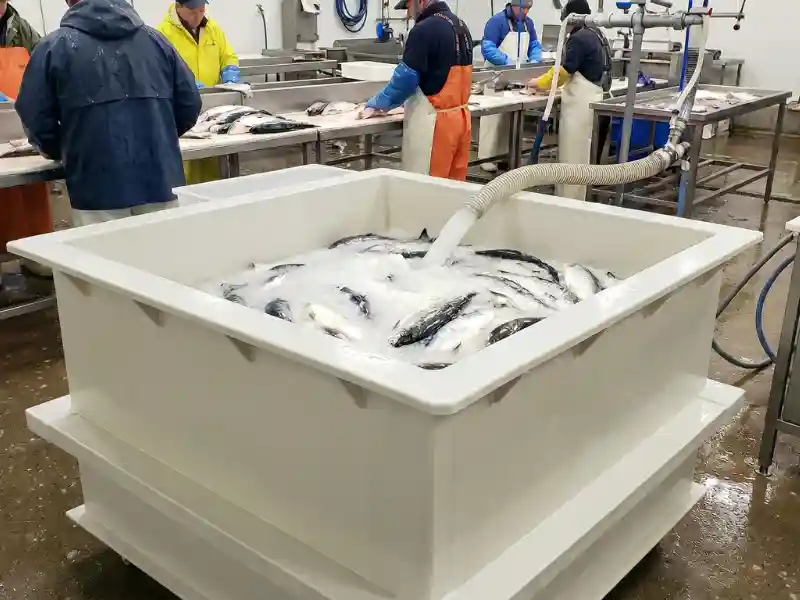 Polypropylene is well suited for seafood processing environments where constant exposure to cleaning agents, brine solutions, and moisture is unavoidable. Natural (non-pigmented) polypropylene meets FDA requirements for food contact and is frequently used in USDA-regulated washdown and chemical-processing areas, offering exceptional resistance to acids, bases, and sanitizing chemicals.
It maintains excellent structural stability in wet conditions and is often preferred over HDPE for brine tanks and slurry ice systems due to its superior resistance to high-temperature 'Clean-In-Place' (CIP) chemical cycles.
Common applications include ice handling bins, drainage channel liners, and brine circulation components. Polypropylene can become brittle in sub-zero temperatures, making it best suited for ambient or washdown areas rather than high-impact freezer applications. By maintaining its integrity during rigorous sanitation cycles, polypropylene reduces chemical degradation and ensures consistent performance in demanding seafood facilities.
Acetal for Portion Cutter Guides, Conveyor Rollers, and Timing Components
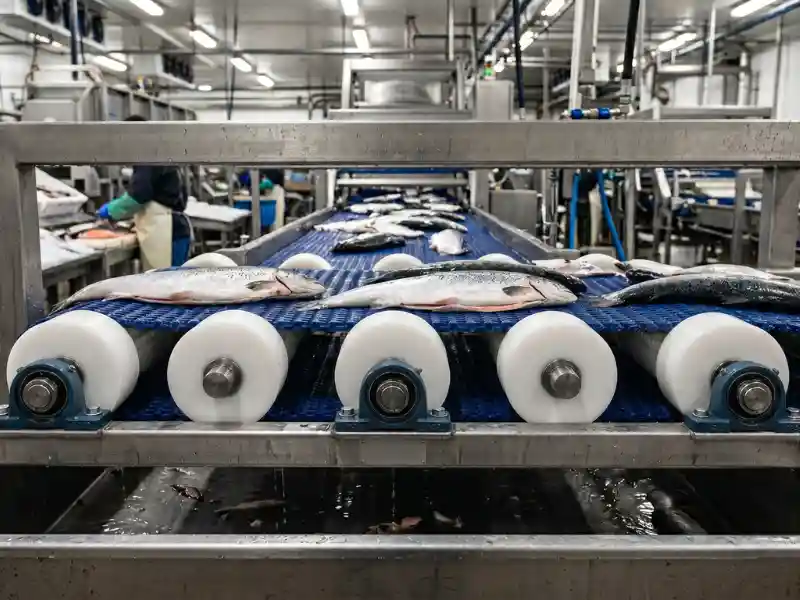 Natural acetal and specialized grades like TECAFORM® AH UD Blue Plate meet FDA requirements for food contact and are widely used in regulated food processing equipment. In cold environments, it maintains superior dimensional stability, ensuring that timing parts and gears do not change size or bind despite extreme temperature fluctuations.
While chemically resistant to most fish oils, acetal should be monitored in systems using high-concentration chlorine or bleach sanitizers, which can cause the material to become brittle over time.
Acetal is used for portion cutter guides, conveyor rollers, and sprockets. While more rigid than polyethylene, acetal retains good impact resistance in sub-zero conditions, making it ideal for components that operate inside freezing equipment. These parts benefit from reduced friction and consistent geometry, which supports accurate cutting and maintains consistent performance across seafood processing and packaging systems.
Nylon for Mechanical Wear Components, Portioning Systems, and Palletizing Guides
 Nylon is a durable material engineered for seafood processing applications involving significant mechanical stress. Natural cast nylon meets FDA requirements for food contact and is commonly used in USDA-regulated mechanical applications.
Known for its exceptional abrasion resistance, it is the preferred choice for load-bearing and high-impact components that must withstand rigorous daily use. Nylon absorbs moisture, which can affect dimensional stability in wet environments and should be considered in tight-tolerance applications.
Nylon is commonly used for portion cutter guides, palletizing guides, and various structural components within seafood production and packaging machinery. Because it excels under mechanical strain, it is selected for parts that require long-term durability in rapid-cycle environments. By utilizing nylon, seafood and fish processors can reduce component wear, support long-lasting machinery performance, and maintain reliable operation across their production lines.
PET for Vacuum Sealing Support Surfaces, Weighing Stations, and Portion Cutter Guides
 PET provides a powerful combination of rigidity, wear resistance, and dimensional stability. Natural (unfilled) PET meets FDA requirements for food contact and is widely used in USDA-regulated food processing and packaging environments. Because PET offers exceptionally low moisture absorption, it maintains consistent dimensional stability even in the most humid or wet facility conditions.
Common applications include vacuum sealing machine supports, weighing station platforms, and portion cutter guides. These specific uses require materials that provide stable, long-term support without deforming over time. By utilizing PET, processors can maintain consistent production conditions, improve equipment durability, and reduce variability in their packaging and portioning operations.
Polycarbonate for Machine Guards, Protective Enclosures, and High-Impact Areas
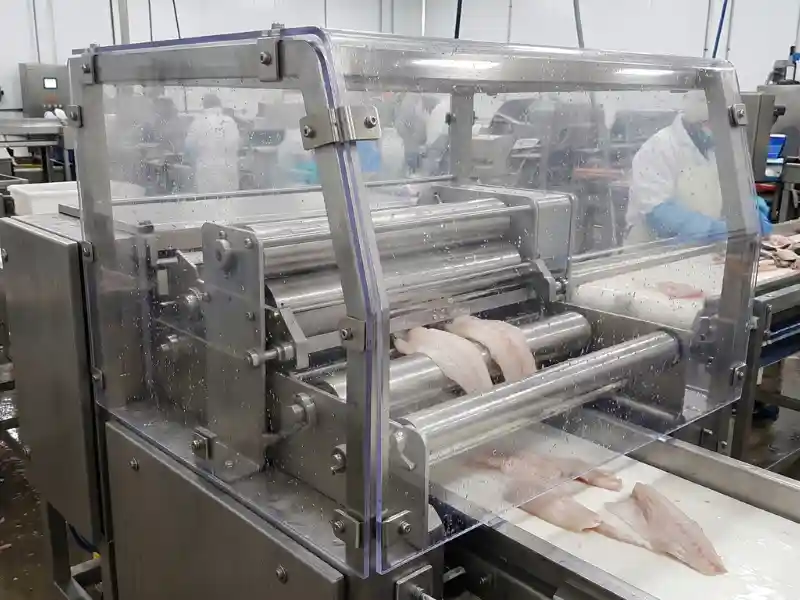 Polycarbonate is the material of choice for seafood processing environments where high-impact resistance and operator protection are critical. While often used for structural guarding, certain grades of polycarbonate meet FDA requirements for food contact. In cold zones, its dimensional stability ensures it remains securely fitted within frames, maintaining essential separation between personnel and machinery.
Polycarbonate provides the clarity of glass with significantly higher durability, making it well suited for protective viewing panels and guarded process areas. In these applications, it enhances visibility while maintaining safe operating conditions in high-traffic zones, allowing equipment to remain fully visible for monitoring and inspection.
Acrylic for Observation Windows, Inspection Panels, and Low-Impact Viewing Areas
 Acrylic is a trusted solution for seafood processing environments where optical clarity is the primary requirement. Standard acrylic does not meet FDA requirements for food contact and is typically used for non-contact observation windows and inspection panels, with specialty grades available for compliant applications. While it offers superior transparency, it has limited impact resistance in sub-zero temperatures, where it can become brittle.
Acrylic allows for real-time monitoring of processing lines, enabling operators to maintain strict quality control and identify issues instantly. While the material is best suited for low-impact areas where high mechanical stress is not a concern, its scratch resistance and clarity make it highly effective for hygiene barriers and splash guards. By utilizing acrylic, processors can ensure clear, unobstructed views of their operations while maintaining a clean and professional production environment.
ABS for Equipment Housings, Light-Duty Enclosures, and Protective Covers
 ABS is a practical material for non-food-contact applications in seafood processing environments and is not FDA-compliant. Its ease of fabrication and reliable structural performance make it an excellent choice for secondary components like equipment housings and light-duty control enclosures. However, it is generally avoided for sub-zero impact areas as it loses toughness in the cold.
ABS is commonly used for equipment housings, light-duty control enclosures, and protective covers in low-moisture zones. These applications leverage the material's toughness and cost-effectiveness to shield internal components from dust and impacts. By utilizing ABS, seafood processors can better protect sensitive equipment, support organized system layouts, and ensure reliable performance in non-food-contact areas of their operations.
PTFE Tapes and Belting for Package Sealing, Cooking, and Smoking Systems
 PTFE tapes and belting are premier solutions for seafood processing applications requiring high-heat resistance and superior non-stick performance. Virgin PTFE meets FDA requirements for food contact and is widely used in USDA-regulated processing environments. It maintains excellent thermal stability and dimensional stability across a wide temperature range, from high heat to cryogenic conditions, making it well suited for vacuum packaging and industrial cooking applications.
Common applications include heat-sealing tapes for baggers and high-temperature conveyor belts and mats used in smoking and cooking lines. In these environments, the material’s thermal stability and consistent release properties are critical for maintaining product integrity and preventing delicate fillets from tearing. By eliminating product adhesion and reducing oily buildup, PTFE helps improve efficiency and reduces maintenance downtime in seafood packaging and processing operations.
Custom Components and Fabricated Parts for Seafood & Fish Processing Equipment
Custom-cut panels and fabricated plastic components help seafood processors, equipment manufacturers, and system integrators standardize critical parts and reduce variability across production lines. Processing tables, cutting surfaces, conveyor components, wear strips, guides, drainage systems, enclosures, and packaging equipment parts can be produced from HDPE, UHMW, polypropylene, marine board, acetal, nylon, PET, and other food-safe plastics based on drawings, CAD files, or existing components. Cut-to-size programs and CNC machining improve dimensional accuracy, reduce material waste, and ensure consistent fit across equipment used in receiving, processing, conveying, and packaging operations.
By sourcing fabrication-ready plastic components, seafood processing operations can streamline production, reduce in-house machining time, and maintain tighter tolerances across processing and packaging systems. This approach helps minimize installation adjustments, improve repeatability across multiple lines or facilities, and support faster turnaround on replacement parts. Interstate Plastics supports these applications by supplying precision-cut and machined components that reduce downtime, improve consistency, and maintain reliable performance in demanding seafood processing environments.
Next Steps for Seafood & Fish Processors
Seafood processors, fish handling facilities, and equipment manufacturers can work with Interstate Plastics to review material options for receiving systems, processing tables, conveyor components, drainage systems, packaging equipment, and precision-machined parts. Share drawings, CAD files, cut lists, dimensions, templates, photos, or a list of recurring challenges such as excessive wear, sanitation issues, chemical exposure, material degradation, or inconsistent part fit across processing lines. We will recommend food-safe plastics and fabrication-ready formats, along with cut-to-size panels or CNC-machined components that improve consistency, reduce rework, and support efficient operation. Interstate Plastics helps seafood processing operations maintain reliable performance, reduce downtime, and improve durability across demanding, high-moisture production environments. Contact your Interstate Plastics representative or email emailsales@interstateplastics.com.