
Static Dissipative vs. Conductive Plastics: What is the Difference?
 Static dissipative vs. conductive plastics—these are two key categories of ESD-control materials used to manage static electricity in sensitive environments. Both help reduce electrostatic discharge (ESD), but they differ in electrical resistance and how quickly they allow charge to move.
Static dissipative materials limit electrical flow so charge disperses slowly and predictably, reducing the likelihood of sudden sparks. Conductive materials provide a very low-resistance path to ground, moving charge away rapidly.
In this guide from Interstate Plastics, we compare these properties in depth, covering surface resistivity and ESD behavior, to help you choose the right static-control material for your application.
Quick Overview: Static Dissipative vs. Conductive Plastics
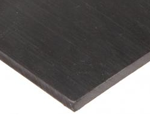 While static dissipative plastics bleed off static slowly and in a controlled way, conductive plastics let charges flow very quickly to ground.
- Both categories are used for ESD control, but not all conductive plastics are automatically ESD-safe/anti-static for sensitive environments; suitability depends on formulation and verified surface resistivity.
- While static dissipative materials have intermediate resistivity that limits current and helps avoid sudden sparks, conductive materials have very low resistivity that prevents charge buildup altogether.
- While static dissipative grades often rely on antistatic agents, light conductive fillers, or inherently dissipative polymers/coatings (including cleanroom-friendly options with no carbon sloughing), conductive grades are typically heavily loaded with conductive fillers like carbon black, carbon fiber, nanotubes, or metallic fibers.
- While static dissipative options can be light-colored or translucent, conductive options are usually black or dark due to filler content.
- While static dissipative is favored for electronics handling, cleanroom fixtures, and ESD work surfaces where a gentle discharge protects sensitive components, conductive is chosen for grounding, EMI/RFI shielding, and explosive/ATEX environments where instant equalization is critical.
While example static dissipative materials include ESD Acetal, ESD polycarbonate/acrylic, ESD UHMW, and ESD PEEK, example conductive materials include carbon-filled PTFE, conductive acetal (e.g., Zellamid® 900X ELS), and carbon fiber-filled PEEK.

Comparison Table for Static Dissipative vs. Conductive Plastics
| Property | Static Dissipative Plastics | Conductive Plastics |
|---|---|---|
| Surface Resistivity | ~105 to 1011—1012 Ω/sq (moderate resistance). | < 105 Ω/sq (low resistance), often 103—105 Ω. |
| ESD Behavior | Controlled dissipation: slowly bleeds off charge to ground, preventing sudden static discharge. | Highly conductive: rapidly equalizes charge with ground, so static does not build up at all. |
| Typical Additives | Antistatic additives or light conductive filler (carbon or fiber in small amounts), or surface dissipative coatings. Often no carbon sloughing, maintaining cleanliness. | Heavy loading of conductive fillers (e.g. carbon black, carbon fiber, metal fibers). Usually black or composite material. |
| Common Applications | ESD work surfaces, electronic device handling trays, cleanroom windows and enclosures, conveyor parts in sensitive manufacturing (to reduce static dust attraction and ESD damage). Ideal for protecting sensitive electronics and preventing static sparks in moderate-risk areas. | Grounding pads, ESD flooring tiles, EMI/RFI shielding components, anti-static brushes, fixtures in explosive environments (to eliminate any spark risk). Used when instant charge dissipation or electrical conductivity is required (e.g. to ground equipment). |
| Example Materials | ESD Acetal (POM) — static dissipative acetal copolymer; Anti-static UHMW-PE — static dissipative polyethylene with ~105—109 Ω surface resist.; ESD Polycarbonate/Acrylic — clear sheets with dissipative coating for windows; ESD PEEK — static-dissipative high-performance plastic for semiconductor parts. | Carbon-Filled POM — conductive acetal with carbon (e.g. POM-C ELS black); Carbon Fiber PEEK — conductive PEEK composite; Conductive PTFE — PTFE loaded with carbon for static bleed; Carbon-Loaded PVC or Polycarbonate for ESD-safe flooring and panels. |
Note: Both static dissipative and many conductive plastics are used as "antistatic" materials, meaning they provide a path for charges to escape. The main difference is how quickly they conduct the charge. However, not all conductive plastics are automatically ESD-safe for sensitive electronics; suitability depends on formulation and surface resistivity. Verify the specific material against applicable ESD standards (e.g., ANSI/ESD S20.20, IEC 61340) for your use case.
Applications & Industries Benefiting from ESD-Safe Plastics
Semiconductor & Electronics Manufacturing
Semiconductor and electronics are perhaps the biggest users of static-control and anti-static plastic. In chip fabrication and PCB assembly, static dissipative fixtures and tools prevent tiny static discharges from destroying sensitive microchips. For example, wafer handling pods, IC chip trays, circuit board assembly racks, and even robot end-effectors are made from static dissipative plastics to safely neutralize any charges. Conductive plastics might be used for grounding blocks or EMI shielding enclosures in testing equipment. These materials significantly reduce component failure rates by protecting against ESD events during production.
Cleanrooms & Medical Device Production
 Cleanroom environments (common in pharmaceutical, biotech, and medical device manufacturing) require materials that do not generate particles or dust. Electrostatic discharge materials are crucial here. Static dissipative acrylic or polycarbonate windows, walls, and enclosures ensure that dust is not attracted to surfaces (since static charge can attract particulate) and that any charge decays safely. The absence of carbon particulates in many dissipative plastics (like carbon-free ESD acetal) is an asset in ultra-clean environments. Medical device assembly also employs ESD-safe workstations and tooling to protect electronic components from electrostatic damage.
Data Centers and IT Infrastructure
While not always as obvious, data centers benefit from ESD plastic. Anti-static plastic flooring (often with conductive or dissipative vinyl tiles) is used to ground personnel and equipment, preventing static buildup in server rooms. Plastic components such as cable trays, server rack mounts, or cooling fan blades can be made from static dissipative plastics to minimize static in areas with high airflow (which can cause static through friction). These measures protect sensitive networking equipment and servers from ESD, ensuring reliable operation.
Packaging & Material Handling
In facilities that handle powders, fine particles, or flammable chemicals (such as pharmaceutical powder lines, grain elevators, or chemical processing), static sparks can be catastrophic. Static dissipative UHMW and HDPE are used for conveyor belt parts, hoppers, chutes, and liners to prevent static charge buildup as materials slide over surfaces. By bleeding off charge (often to a grounded point), they help avoid dust explosions or ignition of fumes. Conductive plastics might be used in grounding straps or connectors on equipment. Even in general packaging of electronics, ESD-safe plastic packaging (totes, bins, clamshells) are made of dissipative polymers to shield the products from static en route.
Automotive & Aerospace
These industries utilize advanced electrostatic discharge materials for both ESD and electromagnetic interference reasons. For instance, fuel system components (fuel hoses, pump housings) sometimes use conductive plastic liners to dissipate static generated by flowing fuel, reducing fire risk. Carbon fiber-reinforced conductive polymers are used in aircraft and satellites to provide lightweight EMI shielding and static dissipation. Additionally, assembly areas for automotive electronics (like airbag controls or ECU units) use static dissipative mats and tooling to protect parts during manufacturing.
ESD-Safe Plastic Materials Offered by Interstate Plastics
ESD Acetal (Static Dissipative Acetal): Cleanroom-friendly, carbon-free dissipative acetal used for precision jigs, fixtures, and sliding components in ESD-sensitive electronics and semiconductor assembly.
Anti-Static UHMW-PE: Wear- and impact-resistant UHMW that reduces static generation; used for conveyor rails, chute liners, and wear strips in packaging, material handling, and powder/flammable-material processing.
ESD Polycarbonate & ESD Acrylic Sheets: Transparent, coated sheets for machine enclosures, windows, glove boxes, and instrument covers in cleanrooms and laboratories, controlling static while maintaining clarity and durability.
ESD PEEK (Static-Dissipative PEEK): High-performance dissipative PEEK for semiconductor wafer handling, test sockets, and aerospace components where ESD safety and advanced mechanical/thermal performance are required.
PTFE (Antistatic / Conductive Grades): Filled PTFE for chemical processing equipment, seals, bearings, and linings in fuel or solvent handling systems to dissipate static while retaining PTFE's chemical inertness and low friction.
Other ESD-Safe Plastics: Anti-static PVC, ESD PETG, ESD ABS, carbon-filled PEI (Ultem). Options for cleanroom wall panels, transparent guards and fixtures, and heat-resistant tooling where static control is needed.
Ready to Get Started? Contact Interstate Plastics for ESD-Safe Solutions
Interstate Plastics is ready to help you conquer static problems. If you're unsure which static dissipative vs. conductive plastic is right for you, or you'd like a quote on material, please reach out to our team. We offer personalized support to ensure you get the best ESD-safe plastic for your application, in the exact size and quantity you need.
Contact Interstate Plastics today to request a quote, get technical assistance, or place an order. Our knowledgeable staff will answer your questions and guide you from material selection to delivery. Don't let static electricity jeopardize your operations — let us provide you with high-performance ESD-safe plastics that keep your business running safely and smoothly. We look forward to being your trusted partner in electrostatic control!
This guide was authored by Christopher Isar and reviewed for technical accuracy by Chris Clark.

About the Author
At Interstate Advanced Materials, Christopher Isar turns "it depends" into "do this." Since 2011, he's helped buyers choose plastics with confidence by focusing on what works on the shop floor and in the field, backed by IAPD Level 2 certification. If your project can't miss, Chris will guide you to cost-effective, real-world options. Contact Chris.