Plastics & Composites Material Selection Triangle
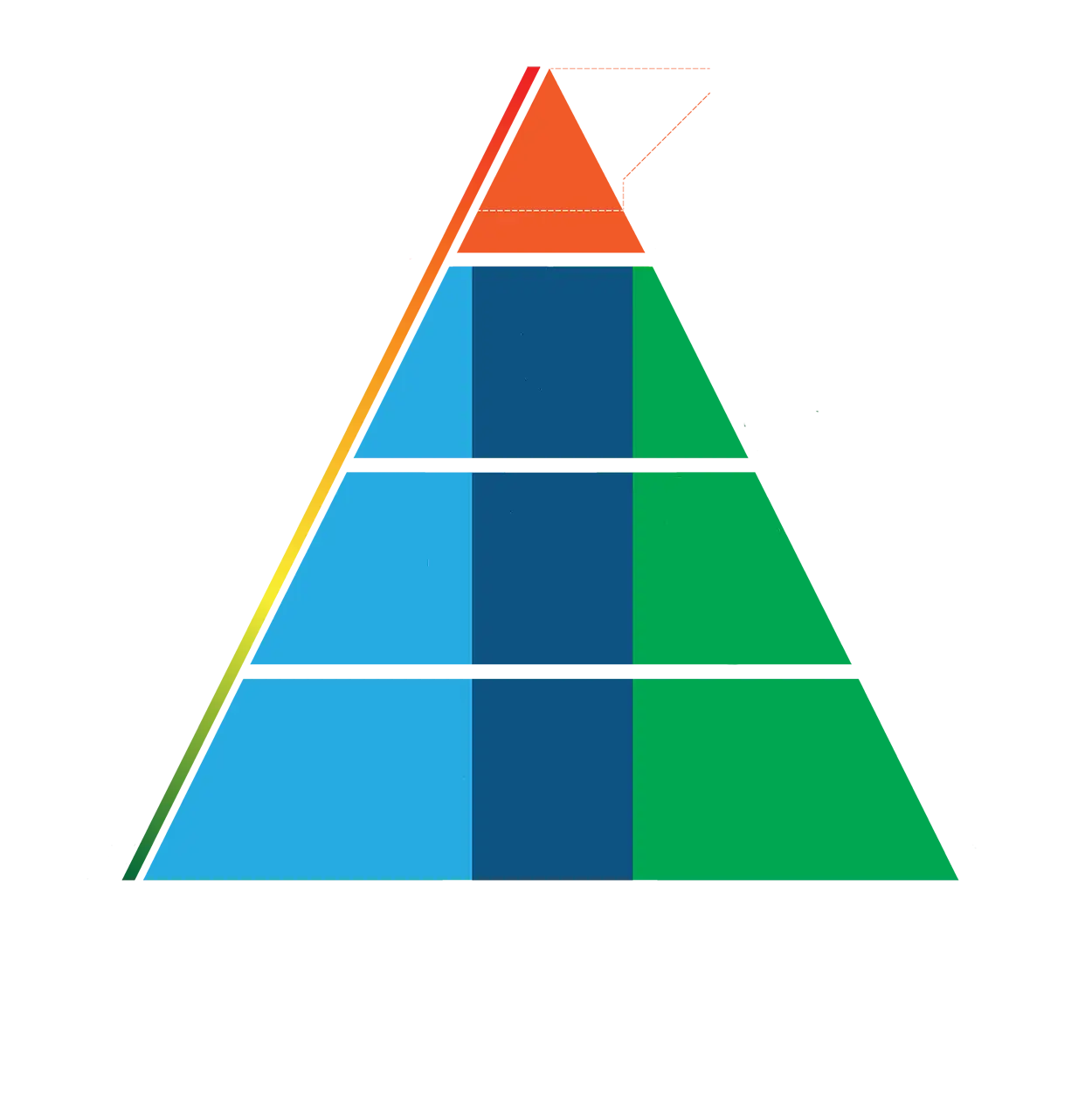
The Interstate Advanced Materials Material Selection Triangle is your guide for selecting polymers based on operating temperature, molecular structure, and chemical resistance. Use this material triangle to quickly navigate the transition from commodity plastics to advanced engineering polymers, then verify your chosen material's suitability for your project with our Plastic Chemical Resistance Chart or view their specific material properties with our Plastic Properties Table.
IMIDIZED MATERIALS
Imidized materials are high temperature, bearing grade materials with the best physical properties above 500°F. They feature high load bearing and wear capabilities, as well as high chemical resistance.
AMORPHOUS MATERIALS
Amorphous plastics soften over a wide temperature range and are easy to thermoform. They are suited for structural applications and bond well using adhesives or solvents. They are not typically resistant to chemicals.
THERMOSET MATERIALS
Thermoset materials strengthen when heat-formed, and cannot be reformed or reheated after initial forming. They are resistant to high operating temperatures, corrosion, and chemicals.
SEMI-CRYSTALLINE MATERIALS
Semi-crystalline plastics have a sharp melting point and great chemical resistance. Semi-crystalline plastics are resistant to stress cracking and ideal for bearing, wear, and structural applications.
Plastics & Composites Material Selection Guide - by Continuous Operating Temperature (COT)
Imidized: Imidized materials are high temperature, bearing grade materials with the best physical properties above 500°F. They feature high load bearing and wear capabilities, as well as high chemical resistance.
Amorphous: Amorphous plastics feature a random molecular structure that softens gradually, making them ideal for precision thermoforming and solvent bonding. They offer superior dimensional stability and impact resistance.
Thermoset: Thermoset materials undergo a permanent chemical cross-linking during formation, creating a molecular bond that will not melt or reform. These materials provide the highest levels of thermal creep resistance.
Semi-Crystalline: Semi-crystalline plastics possess a highly ordered molecular structure with a sharp melting point. This provides exceptional fatigue resistance and lubricity, ideal for bearing and wear applications.