As per our Shipping and Returns Policy, custom cuts and fabricated parts are non-returnable. If you need an over- or undersized item, note it under "Comments" during Checkout. Cut-to-size orders have an acceptable cut tolerance of 1/8" (0.125"), so clarify if the adjustment is to be made on the (+) or (-) side of the saw blade.Please review our full return and shipping policy here.
Measure Twice, Cut Once
Since custom cuts and fabricated parts are non-refundable, be very careful while measuring your dimensions. As each cut is nominal, even the slightest miscalculation could be costly.
How to Use a Measuring Tape
Extend your tape measure several inches to find the 1 and 2 inch markers. In between the inch markers you’ll find 16 equally spaced tick marks.
Measure by counting the increments beyond the nearest inch. As the increments decrease, so does the length of the mark. For example, 1/2" has a bigger mark than 1/4" which has a bigger mark than 1/8". The smallest mark follows at 1/16". Please be aware that some measuring tapes may have even smaller increments.
Features of a Measuring Tape: Sliding End Hook
The sliding end hook is designed for two different types of measurements. An outside measurement (where the hook of the tape hangs over an edge), requires the hook to slide out a bit to account for the thickness of the material. When making an inside measurement (where the hook will push up against a surface), the clip slides in, again, accounting for its thickness. The measuring tape self-adjusts to guarantee an accurate measurement (as far as the tape is concerned).
Sanitizing Acrylic and Polycarbonate Sheet [X]
Acrylic and Polycarbonate Sneeze Guards and like products require special care while cleaning and disinfecting. To maintain the optical clarity of sneeze guards and other acrylic or polycarbonate items, use an acrylic or polycarbonate safe cleaner like Novus Plastic Polish #1, Brillianize Plastic Cleaner, or a mild soap solution.
Please reference the following compatible cleaners when DISINFECTING acrylic and polycarbonate items. The use of commonly available commercial alcohol or ammonia-based disinfectants may cause crazing and damage.
Stress-Relieved for Precision Machining & Dimensional Stability
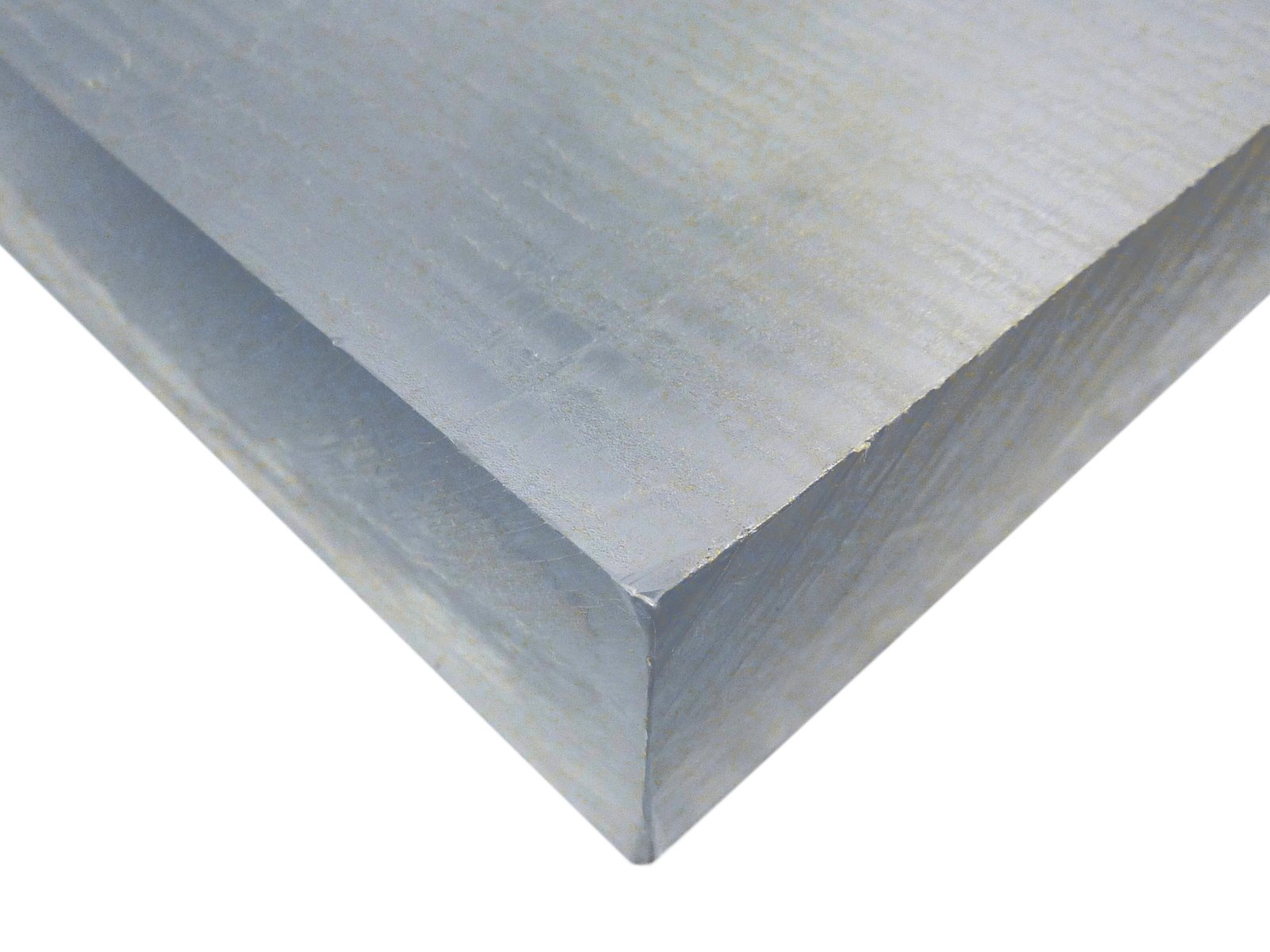
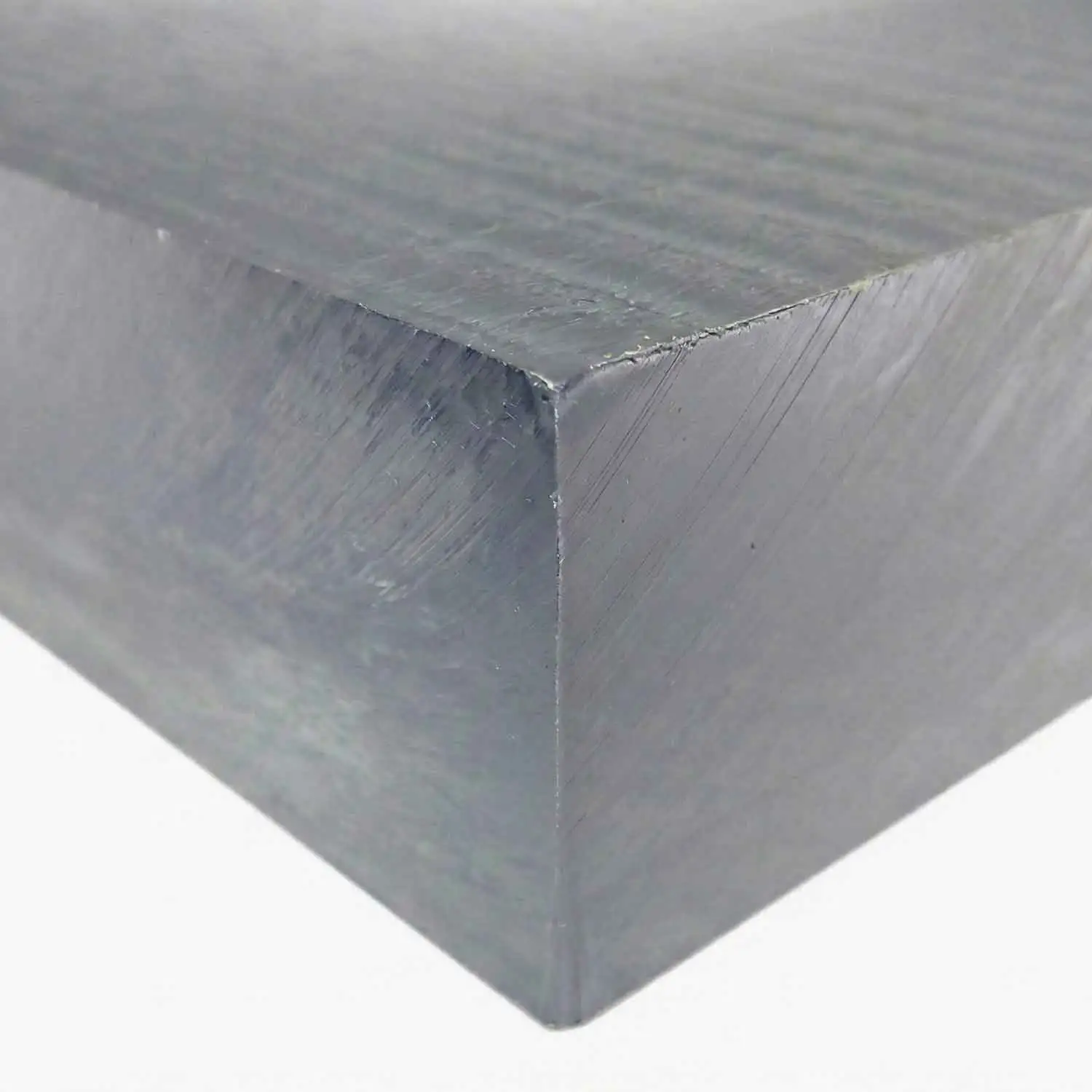
High-performance Machine Grade polycarbonate is an excellent choice for applications requiring heavy-duty durability and tight tolerances. Unlike standard glazing sheet, Machine Grade polycarbonate is an engineering thermoplastic designed with low internal stress.
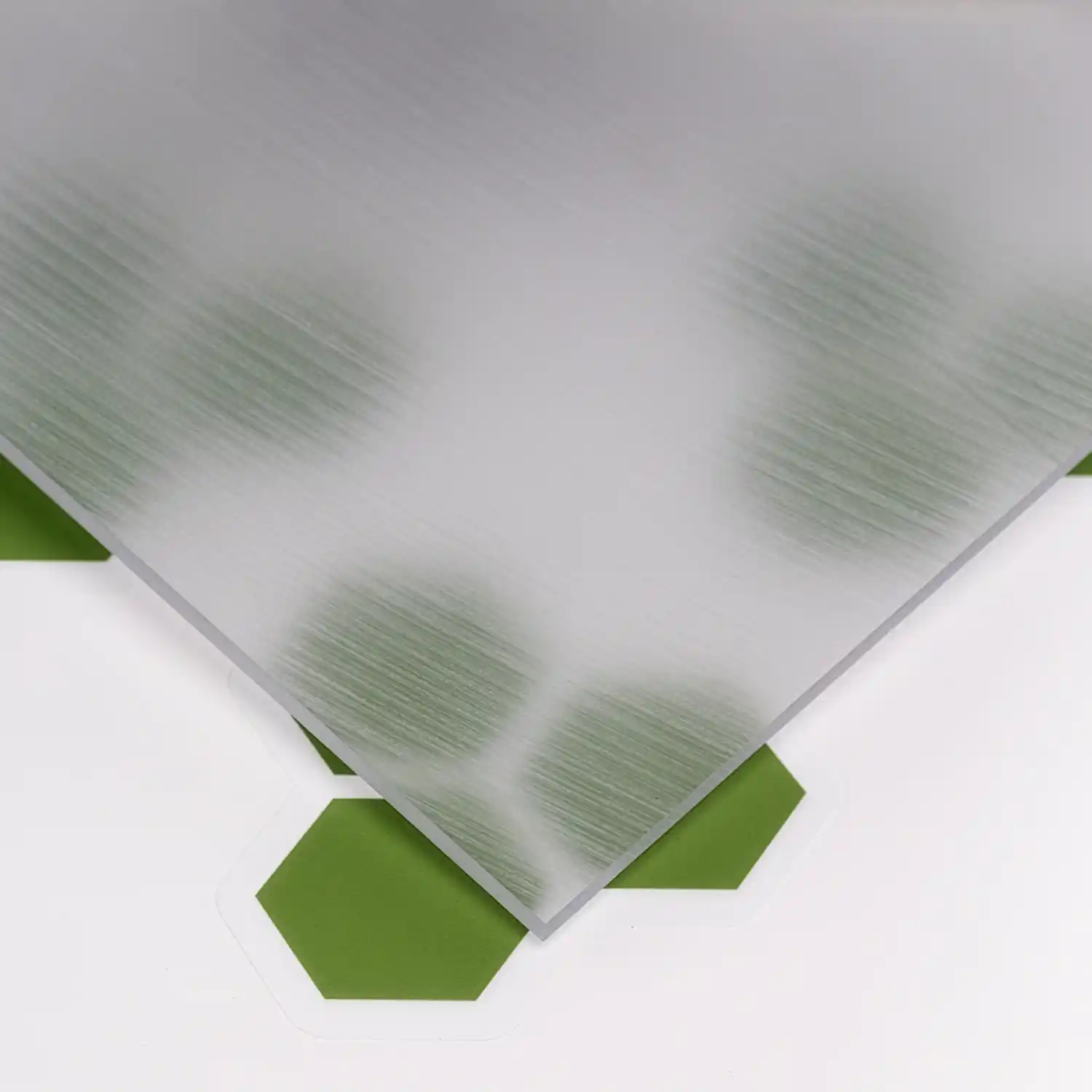
While this stress-relieving process results in a slight haze or frosted appearance, it ensures the material remains dimensionally stable during intense machining and fabrication. It offers the same legendary impact resistance as standard polycarbonate but in thicker gauges suitable for structural components.
Cut-to-size is available for certain Machine Grade thicknesses. Please call (888) 768-5759 for pricing.
Why Choose Machine Grade?
This material is the preferred choice for engineers and machinists. While it trades optical transparency for mechanical reliability, it is specifically manufactured to hold its shape during complex fabrication. It is the correct choice if you need:
Dimensional Stability: Low internal stress allows for complex machining without warping or bowing, critical for manifolds and precision parts.
Extreme Durability: Maintains high stiffness and impact resistance over a wide temperature range (-40°F to 240°F).
Superior Machinability: Can be drilled, tapped, milled, and cut without the cracking or chipping often seen in acrylic or lower-grade plastics.
Structural Integrity: Available in thick gauges (up to 4") ideal for heavy-duty machine guards, sight glasses, and insulators.
Electrical Insulation: Excellent dielectric strength makes it ideal for electrical components and hardware.
Machine Grade Polycarbonate vs. Acrylic
When machining parts, the difference is critical:
Choose Machine Grade Polycarbonate for parts that must withstand impact, vibration, or mechanical stress. It will yield under extreme pressure rather than shattering, making it the "fail-safe" option for heavy-duty industrial components.
Choose Acrylic only if optical brilliance is the sole priority and the part will not be subjected to impact or mechanical stress. Acrylic is prone to cracking during drilling and machining.
Machine Grade polycarbonate is "tool-friendly." Its ductility allows for aggressive machining speeds and feeds. It creates long, continuous chips rather than dust, and allows for cold-bending in thinner gauges without structural failure.
Interstate Plastics is a leader in high-performance engineering plastics. We source our Machine Grade polycarbonate from trusted manufacturers like Ensinger and Covestro to ensure consistent stress relief and gauge tolerance, ensuring your machined parts meet specification every time.
WARNING: This product can expose you to chemicals including Bisphenol A, CAS 80-05-7 , which are known to the State of California to cause birth defects or other reproductive harm. For more information go to www.P65Warnings.ca.gov.
Handling: Cut sheets may have sharp edges. We recommend wearing protective gloves when unpacking and handling this material to ensure safety.
Suitability: We take pride in the quality of our materials as they leave our facility. However, because every project is unique, we cannot account for how materials are modified, stored, or used after delivery. Please perform the necessary tests to ensure this material is right for your specific application and end-use conditions.
POLNM SH
Technical Performance
This machine-grade thermoplastic is engineered for structural applications requiring extreme mechanical durability and precise dimensional control. Unlike standard glazing sheet, this material is manufactured with low internal stress to prevent warping or bowing during material removal.
Impact Strength: Rated at Izod 12–16 ft-lb/in (notched). It absorbs kinetic energy by deforming rather than shattering, creating a "fail-safe" component under load.
Thermal Resilience: Functional operating range of -40°F to 240°F. Resists deformation in high-heat industrial environments.
Machinability: Low internal stress allows for drilling, tapping, and milling with tight tolerances. It produces continuous chips rather than dust, preventing gumming up of tools.
Key Properties
Virtually Unbreakable: Withstands 250x the impact of safety glass and 30x the impact of acrylic, making it ideal for high-stress parts.
High Light Transmission: While optically hazy due to stress-relief, it allows sufficient light passage for fluid level monitoring and internal component visibility.
Dimensional Stability: Low coefficient of thermal expansion (3.75 x 10⁻⁵ in/in/°F) and low moisture absorption ensure parts stay within tolerance.
Dielectric Strength: Excellent electrical insulator (380 V/mil), suitable for high-voltage barriers and hardware.
Flammability: High ignition temperature; available grades meet UL 94 V-0 to V-2 compliance.
Common Industrial Applications
Structural Components: Manifolds, heavy-duty brackets, and housings that require visual monitoring.
High-Impact Guards: Thick-gauge machine guards for ballistics, heavy machinery, or containment.
Fluid Handling: Flow meters and reservoirs where fluid level visibility is critical.
Electrical Hardware: Insulators, connectors, and switchgear components.
Engineering Limitations & Alternatives
While Machine Grade Polycarbonate is versatile, specific machining environments may require specialized materials:
Chemical Sensitivity (Coolants): Susceptible to stress cracking if exposed to certain synthetic cutting fluids, coolants, or aromatic hydrocarbons (often found in synthetic coolants). Better Alternative: If chemical resistance and transparency are priorities, consider PETG (clear) for thicknesses under 0.5", Ultem (PEI), or Polysulfone (PSU).
Scratch Sensitivity: Softer than glass and can be marred by abrasive particulates in a machine shop environment. Better Alternative: For surface hardness in flat applications, consider Abrasion Resistant (AR) Polycarbonate.
Extreme Heat: Continuous service usage above 250°F may lead to deformation under load. Better Alternative: For high-heat transparent applications, consider Ultem (PEI) or Polysulfone (PSU).




 WARNING: This product can expose you to chemicals including Bisphenol A, CAS 80-05-7 , which are known to the State of California to cause birth defects or other reproductive harm. For more information go to